
Muscle soreness is a normal response to physical activity. Whether it’s from strength training, long-distance walking, gardening or extended time on your feet, muscle tightness can impact recovery and overall comfort.
One time-tested remedy is the use of Epsom salt and warm water in a bath. But how exactly do Epsom salt and muscle recovery connect?
Let’s explore the benefits in a practical, evidence-informed way.
What Is Epsom Salt and Why Is It Used in Baths?
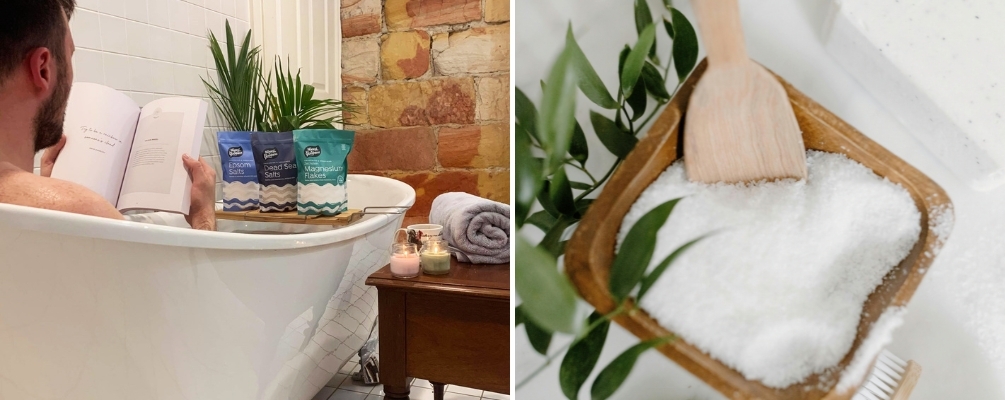
Epsom salt is the common name for magnesium sulfate, a naturally occurring mineral compound made up of magnesium, sulfur and oxygen.
Despite its name, Epsom salt is not the same as table salt. It has been traditionally used in bathing practices to support relaxation and muscle comfort.
Magnesium plays a role in:
- Supporting normal muscle function
- Helping regulate muscle contraction and relaxation
- Contributing to nervous system balance
- Supporting energy production
When discussing Epsom salt and muscle recovery, the focus is largely on magnesium’s role in muscle relaxation and the calming effect of warm water immersion.
Epsom Salt and Muscle Soreness
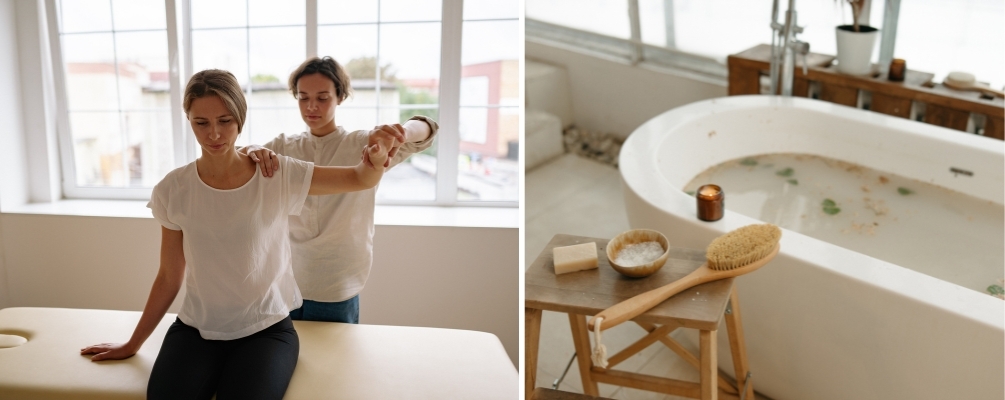
After exercise, especially unfamiliar or high-intensity movement, muscles can feel sore. This is commonly known as delayed onset muscle soreness (DOMS).
The combination of epsom salt and warm water may support recovery in two ways:
- Warm water immersion encourages circulation
- Magnesium in Epsom salt supports muscle relaxation
While research into transdermal magnesium absorption continues to evolve, many people report feeling reduced tightness after soaking in an Epsom salt bath.
Epsom Salt and Inflammation After Exercise
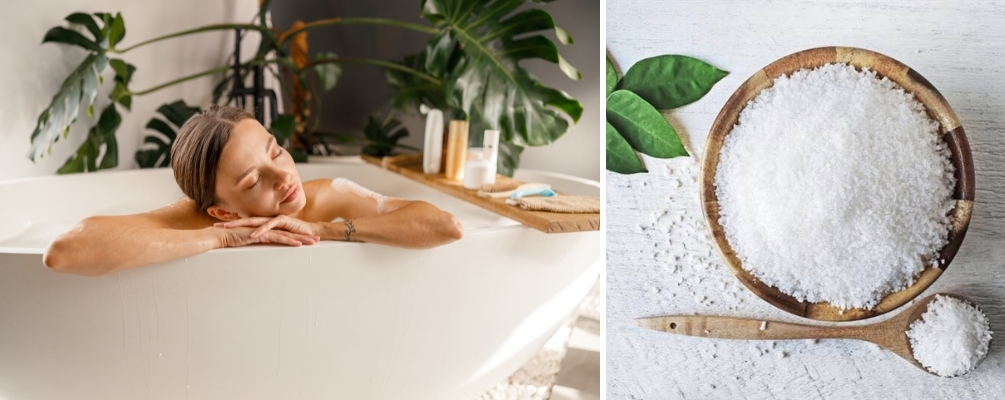
Exercise naturally creates temporary inflammation as part of the muscle repair process.
Warm baths increase blood flow, which may help deliver nutrients to muscles and assist with the removal of metabolic by-products.
Although Epsom salt is not a substitute for proper rest, hydration or nutrition, the combination of Epsom salt and post-workout recovery routines can be a supportive addition.
Epsom Salt and Relaxation
Muscle recovery also depends on nervous system regulation. Stress and muscle tension often go hand in hand.
Magnesium is often referred to as a “relaxation mineral” because of its role in helping muscles release after contraction and supporting calmness.
Using Epsom salt and an evening bath routine may help:
- Reduce physical tension
- Encourage relaxation
- Support better sleep quality
Since muscle repair largely occurs during sleep, this indirect benefit may be just as important as physical muscle relief.
Different Types of Epsom Salt
While Epsom salt is commonly referred to as magnesium sulfate, it can be sourced and produced in different ways depending on the raw material and processing method.
Some Epsom salts are produced through a chemical synthesis process, where magnesium oxide reacts with sulfuric acid to form magnesium sulfate. This process allows manufacturers to create consistent, high-purity crystals that are widely used in bath salts and wellness products.
Other varieties are derived from naturally occurring mineral sources, such as kieserite - a naturally occurring magnesium sulfate mineral. In this case, the production process typically involves dissolving the mineral in water and allowing the magnesium sulfate to crystallise, resulting in a product that undergoes fewer processing steps.
Both types contain magnesium sulfate, which is the key compound associated with Epsom salt baths and their traditional use in relaxation and muscle comfort.
You may also notice slight differences between products, such as:
- Crystal size, where some Epsom salts appear as larger granules and others as finer crystals
- Country of origin, depending on where the mineral or raw materials are sourced
- Processing method, which may be chemical or mineral-derived
For bathing purposes, both forms dissolve easily in warm water and can be used in the same way as part of a recovery or relaxation routine.
How to Use Epsom Salt and Warm Water for Recovery
To prepare an Epsom salt bath:
- Fill a bathtub with warm (not excessively hot) water
- Add 1–2 cups of Epsom salt
- Stir until fully dissolved
- Soak for 15–20 minutes
- Stay hydrated afterwards
For a smaller soak, such as tired feet, combine Epsom salt and warm water in a basin using ½–1 cup of salt.
When to Use Epsom Salt and Recovery Baths
You may consider Epsom salt baths:
- After strength training sessions
- Following long runs or endurance exercise
- During physically demanding periods
- When experiencing general muscle tightness
- As part of a weekly recovery ritual
Consistency often leads to more noticeable benefits.
Also read:
- Cacao vs. Cocoa – Is There a Difference & Which One is Best?
- A Mindful Clean Eating Guide
- Nourishing the Year of the Horse: Traditional Ingredients & Their Wellness Benefits
Is Epsom Salt Safe?
Epsom salt is generally considered safe for external use.
However:
- Avoid very hot water if you have cardiovascular conditions
- Consult a healthcare professional if you have kidney concerns
- Do not ingest Epsom salt unless medically advised
If irritation occurs, discontinue use.
Final Thoughts on Epsom Salt and Muscle Recovery
The connection between Epsom salt and muscle recovery lies in the combination of warm water immersion and magnesium’s role in supporting normal muscle function.
While it should not replace adequate nutrition, hydration, stretching and sleep, incorporating Epsom salt into a recovery routine can be a simple and grounded approach to easing muscle tension naturally.
If you’re looking for a practical way to unwind after physical activity, an Epsom salt bath may offer gentle support for both body and mind.
![General Wholefoods [Supplier Spotlight]](https://cdn11.bigcommerce.com/s-dis4vxtxtc/images/stencil/160w/uploaded_images/general-wholefoods-1.jpg "General Wholefoods [Supplier Spotlight]")


![goodMix [Supplier Spotlight]](https://cdn11.bigcommerce.com/s-dis4vxtxtc/images/stencil/160w/uploaded_images/goodmix-thumbnail.jpg "goodMix [Supplier Spotlight]")