Black rice is a wholegrain rice known for its deep purple-black colour, mildly sweet flavour and satisfying chewy texture. Its dark colour comes from naturally occurring plant pigments called anthocyanins, which are also found in foods such as blueberries, blackberries and purple cabbage.
Sometimes called forbidden rice, black rice has been enjoyed throughout Asia for centuries. Today, it is used in grain bowls, salads, stir-fries, curries, sushi and traditional desserts such as black rice pudding.
Black rice can generally be used wherever you would normally serve brown or white rice, making it an easy way to introduce a different colour, flavour and texture to everyday meals.
What Is Black Rice?
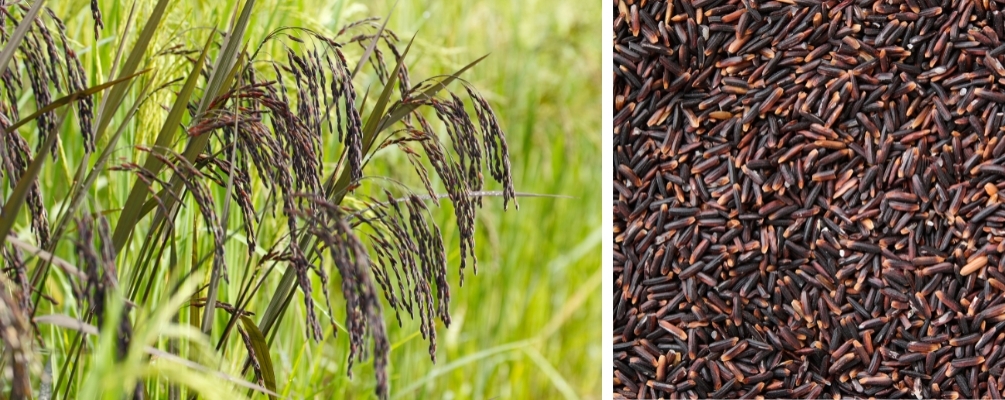
Black rice is a pigmented variety of rice belonging to the species Oryza sativa. Unlike white rice, black rice retains its bran layer, making it a wholegrain.
The bran contains anthocyanins, the natural pigments responsible for the grain’s dark appearance. Although uncooked black rice may look almost completely black, it usually becomes a rich purple colour when cooked.
Black rice is available in several varieties, including long-grain, short-grain, glutinous and non-glutinous types. These varieties may differ slightly in flavour, texture and cooking time.
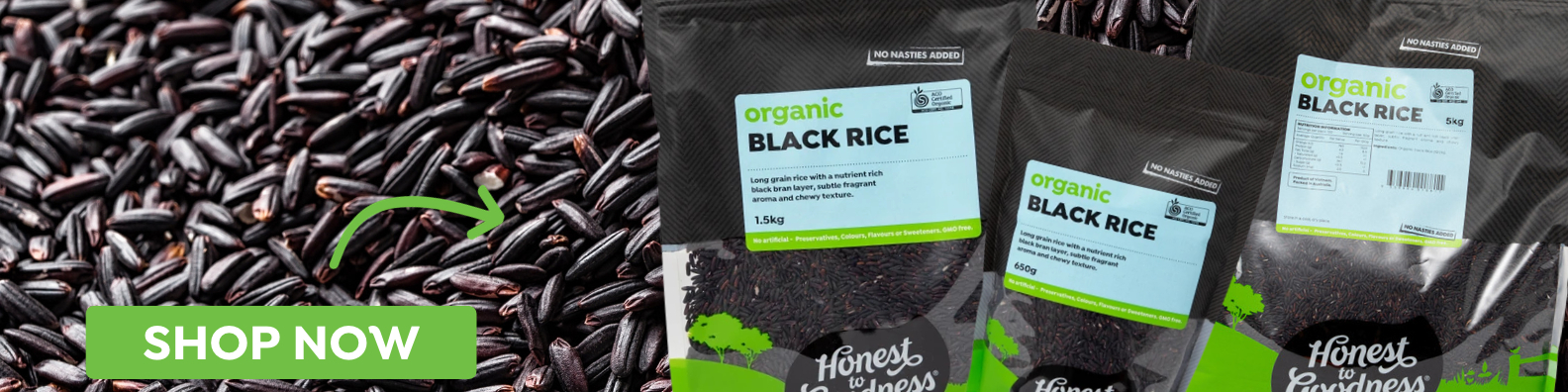
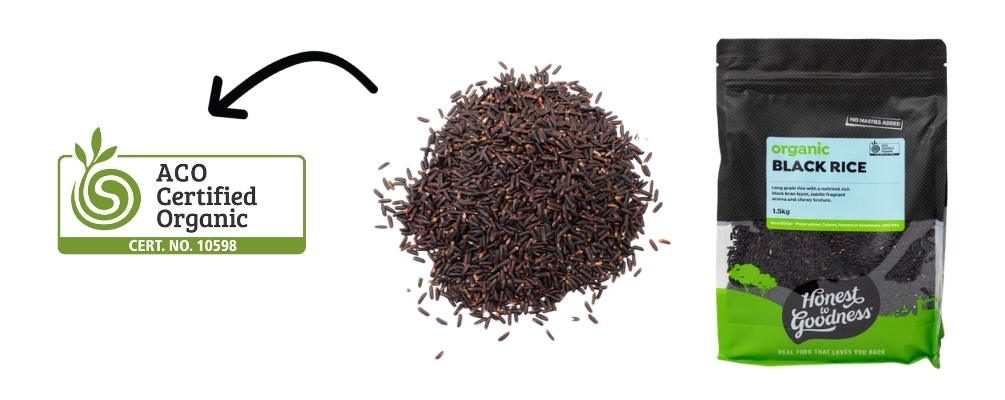
Our Organic Black Rice is grown in Vietnam and contains 100% organic black rice.
Why Is Black Rice Called Forbidden Rice?
Black rice is sometimes called forbidden rice, emperor’s rice or purple rice.
The name “forbidden rice” is commonly connected to stories from ancient China, where the grain was believed to have been reserved for royalty because it was rare and highly valued. According to these accounts, ordinary people had limited access to it.
Although the exact historical origin of the name is difficult to verify, “forbidden rice” is now widely used as another name for black rice.
Black rice is no longer forbidden or limited to royalty. It is now grown in several regions and enjoyed in both traditional and contemporary dishes around the world.
Where Does Black Rice Come From?
Black rice has a long history in Asian cuisine and is grown in countries including China, Thailand, Indonesia and Vietnam. Different regions grow distinct black rice varieties, which may be glutinous or non-glutinous and can vary in grain length and texture.
Honest to Goodness Organic Black Rice is a product of Vietnam.
Black rice is now also grown on a smaller scale in other countries, including Australia, as interest in colourful wholegrains continues to grow.
What Does Black Rice Taste Like?
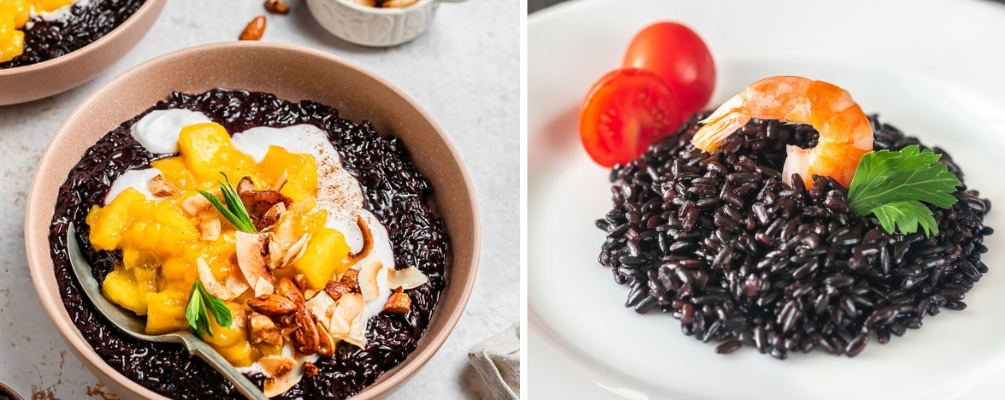
Black rice has a mildly sweet, nutty and earthy flavour. Its taste is more noticeable than white rice but still mild enough to pair with a wide range of ingredients.
When properly cooked, black rice has a tender yet pleasantly chewy texture. It is generally firmer than white rice and similar in texture to brown rice.
Its rich purple-black colour can also add visual contrast to:
- Poke bowls
- Grain salads
- Stir-fries
- Curries
- Sushi
- Roasted vegetables
- Rice puddings
- Breakfast bowls
Black Rice Nutrition
Black rice is a wholegrain that naturally contains carbohydrates, plant protein, dietary fibre and small amounts of fat.
The typical nutritional values for Honest to Goodness Organic Black Rice are:
|
Average quantity |
Per 100g, uncooked |
|
Energy |
1506kJ |
|
Protein |
8g |
|
Total fat |
3.5g |
|
Saturated fat |
1g |
|
Carbohydrate |
75g |
|
Sugars |
1g |
|
Sodium |
0mg |
These values relate to the uncooked product. Cooked black rice contains water and will therefore have different values per 100g.
Black rice also contains anthocyanins in its pigmented outer layer. The exact nutrient and anthocyanin content can vary according to the rice variety, growing conditions and processing method.
What Are the Benefits of Black Rice?
Black rice can contribute wholegrains, plant protein and dietary fibre to a varied and balanced diet.
A Wholegrain Option
Black rice retains its bran and germ, unlike white rice, which has these outer layers removed during milling. The bran and germ contribute fibre and other naturally occurring nutrients.
Contains Dietary Fibre
As a wholegrain, black rice naturally contains dietary fibre. Fibre forms part of a balanced diet and supports normal digestive function.
The amount of fibre can vary between black rice varieties, so check the nutrition information panel for the product you are using.
Provides Plant Protein
Our Organic Black Rice provides approximately 8g of protein per 100g uncooked. It can help add plant protein to vegetarian and vegan meals when served alongside vegetables, legumes, tofu, nuts or seeds.
Contains Anthocyanins
The dark purple-black colour of black rice comes from anthocyanins. These are naturally occurring plant pigments with antioxidant properties.
Black rice can therefore help increase the variety of naturally colourful plant foods included in your diet. However, it should not be treated as a cure or treatment for any health condition.
Naturally Low in Sodium
Plain black rice contains very little sodium. The final sodium content of a meal will depend on what is added during cooking and serving, such as stock, sauces, seasoning or salt.
Is Black Rice Healthy?
Black rice can be a nutritious wholegrain choice as part of a varied and balanced diet. It provides carbohydrates for energy, along with plant protein, fibre and naturally occurring plant pigments.
However, no individual type of rice is automatically the healthiest choice for everyone. Portion size, preparation method and the other ingredients included in the meal also matter.
For a balanced meal, try serving black rice with:
- Plenty of vegetables
- Legumes or tofu
- Fish, eggs or lean meat
- Nuts or seeds
- A source of healthy fats
- A flavourful dressing or sauce
People managing diabetes, digestive conditions or other medical dietary requirements should seek individual advice from a qualified healthcare professional.
How to Cook Black Rice
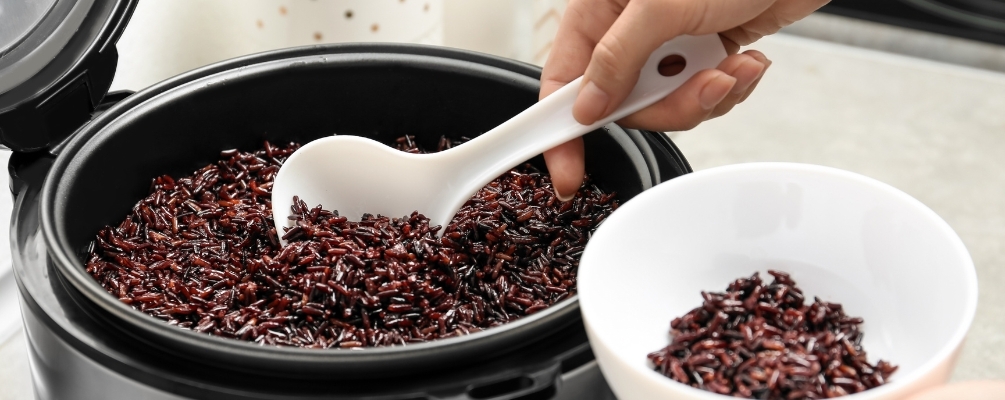
Cooking black rice is similar to cooking brown rice, although it generally requires more water and a longer cooking time than white rice.
Stovetop Method
For Honest to Goodness Organic Black Rice:
- Rinse the rice in cold water, then drain.
- Add 1 cup of black rice and 2¼ cups of water or stock to a saucepan.
- Bring to the boil over medium-high heat.
- Cover the saucepan and reduce the heat to a gentle simmer.
- Cook for approximately 30–35 minutes, or until the rice is tender and the liquid has been absorbed.
- Remove the saucepan from the heat.
- Leave the rice covered for approximately five minutes.
- Fluff gently with a fork before serving.
Cooking times may vary depending on the variety of black rice, the saucepan and the heat level. Always check the directions on the product packaging.
Black rice can stain light-coloured utensils or cookware temporarily because its natural pigment is released into the cooking water.
Does Black Rice Need to Be Soaked?
Black rice does not generally need to be soaked before cooking. Rinsing it in cold water is usually sufficient for everyday savoury dishes.
Soaking may help shorten the cooking time slightly and can be useful for particular recipes. For example, black rice is often soaked before preparing a creamy black rice pudding.
If soaking black rice:
- Cover it completely with clean water.
- Refrigerate it if soaking for several hours or overnight.
- Drain and rinse it before cooking.
- Adjust the cooking time because soaked rice may cook faster.
For our Black Rice Pudding with Mango Compote and Salted Coconut Crema, the rice is soaked for three hours or overnight before cooking.
Black Rice vs Brown Rice
Black rice and brown rice are both wholegrain varieties because they retain their bran and germ. However, they differ in colour, flavour and plant pigments.
|
|
Black Rice |
Brown Rice |
|
Colour |
Purple-black |
Light to dark brown |
|
Flavour |
Nutty, earthy and mildly sweet |
Mild and nutty |
|
Texture |
Firm and chewy |
Tender and chewy |
|
Plant Pigments |
Contains anthocyanins |
Does not contain the same dark anthocyanin pigments |
|
Cooking Time |
Approximately 30–35 minutes |
Varies, generally longer than white rice |
|
Common Uses |
Grain bowls, salads, stir-fries, sushi and puddings |
Curries, stir-fries, bowls and everyday side dishes |
Neither option is inherently better for every person. Both can contribute wholegrains and variety to a balanced diet.
Choose black rice when you want a more distinctive colour, firmer texture and slightly sweeter flavour. Choose brown rice when you want a milder wholegrain option.
Black Rice vs White Rice
Black and white rice come from rice plants, but they undergo different levels of processing.
Black rice retains its dark bran layer, while white rice has the bran and germ removed during milling.
|
|
Black Rice |
White Rice |
|
Grain Type |
Wholegrain |
Refined grain |
|
Colour |
Purple-black |
White |
|
Flavour |
Nutty and mildly sweet |
Mild and neutral |
|
Texture |
Firm and chewy |
Soft and fluffy |
|
Cooking Time |
Longer |
Generally shorter |
|
Best For |
Bowls, salads, puddings and colourful side dishes |
Curries, fried rice, sushi and everyday meals |
White rice can still form part of a balanced diet. The most suitable option depends on the recipe, desired texture and individual dietary needs.
Is Black Rice the Same as Wild Rice?
No. Black rice and wild rice are different grains.
Black rice is a variety of rice belonging to the Oryza genus. Wild rice comes from aquatic grasses belonging to the Zizania genus.
They also differ in appearance and texture:
|
|
Black Rice |
Wild Rice |
|
Plant Family |
Rice |
Aquatic grass |
|
Appearance |
Short or medium purple-black grains |
Long, narrow, dark grains |
|
Flavour |
Nutty and mildly sweet |
Earthy and strongly nutty |
|
Texture |
Tender and chewy |
Firm and chewy |
Although they can sometimes be used in similar grain bowls and salads, they are not the same ingredient and may require different cooking methods.
Is Black Rice Gluten Free?
Black rice is naturally gluten free. Despite its name, glutinous black rice also does not contain gluten—the term “glutinous” describes its sticky texture when cooked.
People with coeliac disease or a diagnosed gluten sensitivity should still check the product label for allergen information and possible cross-contact warnings.
Honest to Goodness Organic Black Rice contains 100% organic black rice and has no declarable allergens according to its current product information.
How to Eat Black Rice
Black rice can generally be used wherever you would normally serve brown or white rice.
Try adding it to:
- Poke bowls
- Buddha bowls
- Grain salads
- Stir-fries
- Curries
- Sushi rolls
- Stuffed vegetables
- Rice paper roll fillings
- Soups
- Roasted vegetable bowls
- Black rice pudding
- Breakfast bowls
- Its purple-black colour pairs particularly well with brightly coloured vegetables, mango, avocado, edamame, carrots, roasted pumpkin and leafy greens.
Black rice can also be combined with white or brown rice. Check the cooking times first, as different rice varieties may not finish cooking at the same time.
Can You Use Black Rice in Desserts?
Yes. Black rice is widely used in sweet dishes, particularly across Southeast Asia.
Its naturally nutty flavour and chewy texture pair well with:
- Coconut milk
- Mango
- Banana
- Coconut sugar
- Maple syrup
- Cinnamon
- Toasted coconut
- Nuts and seeds
Try our Black Rice Pudding with Mango Compote and Salted Coconut Crema, which can be enjoyed as a dessert or a special breakfast.
How to Store Black Rice
To help maintain freshness:
- Store uncooked black rice in an airtight container.
- Keep it in a cool, dry pantry.
- Protect it from direct sunlight and moisture.
- Always reseal the packaging after use.
- Follow the best-before date on the package.
Cooked black rice should be cooled promptly and refrigerated in a sealed container. Follow Australian food-safety guidance for cooling, storing and reheating cooked rice, and discard it if it has been left at room temperature for an extended period.
Frequently Asked Questions
- Can you eat black rice every day?
Black rice can be enjoyed regularly as part of a varied and balanced diet. Eating a range of wholegrains rather than relying on only one variety can provide greater dietary variety. - Is black rice healthier than brown rice?
Black and brown rice are both wholegrains with slightly different nutrient and plant-pigment profiles. Black rice contains dark anthocyanin pigments, while brown rice has a milder flavour and is often more widely available. Neither is automatically better for everyone. - Is black rice healthier than white rice?
Black rice retains its bran and germ, while white rice has these layers removed. This means black rice generally provides more fibre and naturally occurring plant compounds. White rice can still be included in a balanced diet. - Why does black rice turn purple when cooked?
Heat and water release the natural anthocyanin pigments in its bran, causing the rice and cooking liquid to become deep purple. - Does black rice stay black after cooking?
Cooked black rice usually becomes dark purple rather than remaining completely black. - Is black rice supposed to be chewy?
Yes. Properly cooked black rice generally has a tender but chewy texture. If it is still hard in the centre, add a small amount of water and continue cooking. - Does black rice need to be rinsed?
Rinsing black rice helps remove excess surface starch and any fine particles before cooking. Drain it thoroughly after rinsing. - Can black rice be cooked in a rice cooker?
Yes. Black rice can be prepared in many rice cookers. Use a wholegrain or brown-rice setting where available and follow the appliance and product instructions. - Can black rice be cooked like white rice?
The basic process is similar, but black rice generally requires more water and a longer cooking time than white rice. - Is forbidden rice the same as black rice?
“Forbidden rice” is a commonly used name for black rice. However, black rice includes several varieties, so flavour, grain length and stickiness can vary. - Is black rice suitable for vegans?
Plain black rice is entirely plant-based and suitable for vegetarian and vegan diets. - Where can I buy black rice?
Honest to Goodness Organic Black Rice is available online in sizes suitable for home kitchens and bulk use.
Final Thoughts
Black rice is a colourful and versatile wholegrain with a mildly sweet, nutty flavour and satisfyingly chewy texture. Its deep purple-black colour comes from naturally occurring anthocyanin pigments in the bran.
Whether served in a grain bowl, paired with a curry, tossed through a salad or transformed into a creamy rice pudding, black rice offers an easy way to add colour, wholegrains and variety to everyday meals.
Explore our Organic Black Rice, made from 100% organically grown black rice. It is perfect for savoury dishes, colourful salads, nourishing bowls and traditional black rice desserts.