Carob powder is a naturally sweet, caffeine-free powder made from the roasted and ground pulp of carob pods. It has a sweet, earthy and lightly malted flavour and is commonly used in cakes, biscuits, smoothies, desserts and homemade drinks.
Although carob is often used as an alternative to cocoa or cacao powder, it is a different ingredient with its own flavour, nutritional profile and cooking characteristics.
Carob’s natural sweetness means recipes may require less added sweetener when it is used in place of cocoa powder.
Where Does Carob Powder Come From?
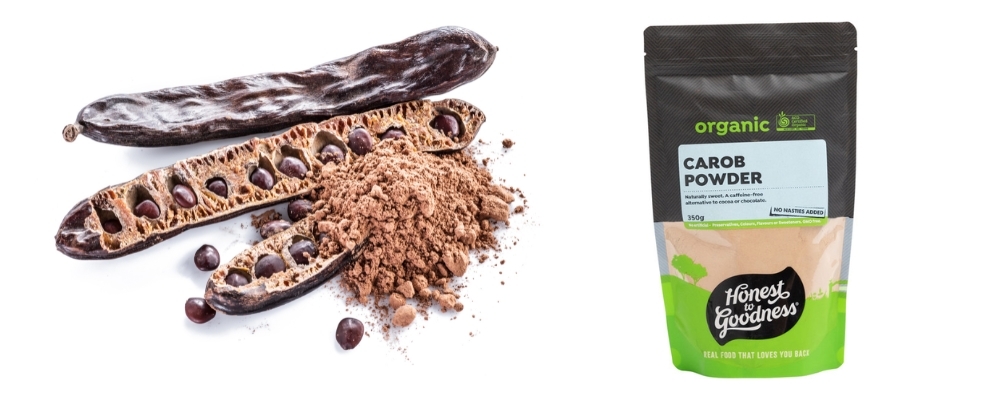
Carob powder comes from the carob tree, botanically known as Ceratonia siliqua. The tree is native to the Mediterranean region and produces long, dark brown pods containing sweet pulp and hard seeds.
The edible pulp makes up most of the carob pod. Once harvested, it can be dried, roasted and ground into a fine powder.
Carob trees thrive in warm, dry climates and are now grown in several parts of the world, including Australia. Honest to Goodness Organic Carob Powder is grown and produced in Australia using 100% Australian carob.
How Is Carob Powder Made?
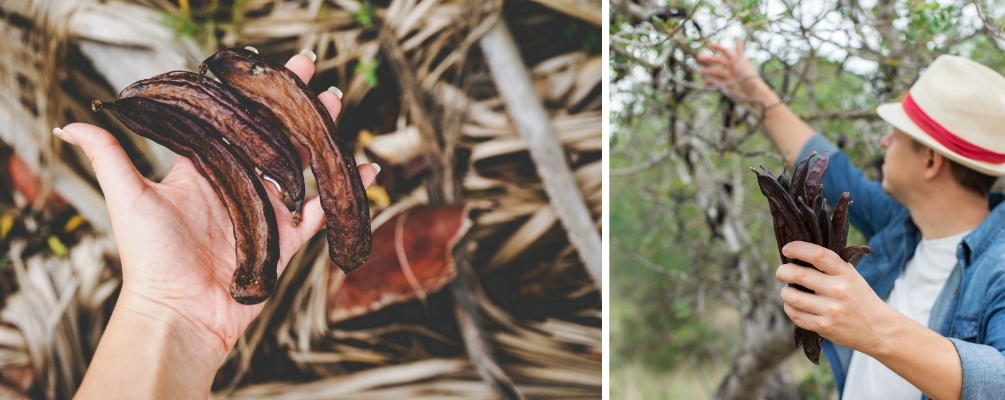
Carob powder is made from the pulp of mature carob pods rather than the seeds.
The general process involves:
- Harvesting mature carob pods.
- Separating the pod pulp from the seeds.
- Drying and roasting the pulp.
- Grinding the roasted pulp into a fine powder.
- Packaging the powder for cooking and baking.
Roasting develops carob’s rich colour and naturally sweet, earthy flavour.
Honest to Goodness Organic Carob Powder is roasted rather than raw. It contains 100% organic carob powder with no added sugar, artificial colours, flavours or preservatives.
What Does Carob Powder Taste Like?
Carob powder has a naturally sweet, earthy and lightly malted flavour. It is often compared with cocoa because of its brown colour and common use in desserts, but it does not taste exactly like chocolate.
Compared with cocoa powder, carob is generally:
- Sweeter
- Less bitter
- Less intense
- More earthy and malted
- Naturally caffeine-free
Its mild sweetness makes it suitable for cakes, biscuits, slices, smoothies and warm drinks. Because it is less bitter than cocoa, you may be able to reduce the other sweeteners in a recipe.
Carob Powder Nutrition
Carob powder naturally contains carbohydrates, sugars, plant protein and very little fat. Its sugars occur naturally within the carob pod rather than being added during production.
The typical nutritional values for Honest to Goodness Organic Carob Powder are:
|
Average quantity |
Per 100g |
|
Energy |
1300 kJ |
|
Protein |
6.1g |
|
Total fat |
Less than 0.2g |
|
Saturated fat |
Less than 0.1g |
|
Carbohydrate |
58g |
|
Sugars |
51g |
|
Sodium |
8.3mg |
These values can vary between carob products, particularly if sugar, oils or other ingredients have been added. Always check the ingredient list and nutrition information panel.
Is Carob Powder Caffeine-Free?
Yes. Pure carob powder is naturally caffeine-free.
Cocoa and cacao contain naturally occurring caffeine and theobromine, while carob does not naturally contain these stimulants. This makes carob a useful option for people who choose to avoid caffeine or want a caffeine-free flavour for drinks and desserts.
However, products made with carob may also contain chocolate, coffee or other caffeinated ingredients. Check the complete ingredient list when purchasing carob bars, chips, drinks or desserts.
Is Carob Powder the Same as Cocoa Powder?
No. Carob and cocoa powders come from different plants and have different flavours and nutritional characteristics.
Carob powder is made from the pulp of pods produced by the carob tree. Cocoa powder is made from cacao beans after they have been fermented, roasted, ground and pressed to remove some of their cocoa butter.
|
|
Carob Powder |
Cocoa Powder |
|
Plant source |
Carob pod |
Cacao bean |
|
Flavour |
Sweet, earthy and malted |
Rich, chocolatey and bitter |
|
Natural sweetness |
Higher |
Lower |
|
Caffeine |
Naturally caffeine-free |
Naturally contains caffeine |
|
Theobromine |
Naturally absent or negligible |
Naturally present |
|
Fat content |
Very low |
Generally higher |
|
Common uses |
Baking, smoothies, drinks and desserts |
Baking, chocolate, drinks and desserts |
Neither ingredient is automatically better. The right choice depends on the flavour you want, your dietary preferences and the recipe.
Carob Powder vs Cacao Powder
Cacao powder is made from cacao beans and has a rich, intense and often bitter chocolate flavour. Carob powder comes from carob pod pulp and tastes naturally sweeter and milder.
The term “cacao powder” is often used for a product processed at lower temperatures, while “cocoa powder” may refer to roasted or otherwise processed cacao. Product definitions and manufacturing methods can vary between brands.
Carob may be preferred when you want:
- A naturally caffeine-free ingredient
- A sweeter and less bitter flavour
- A very low-fat powder
- A chocolate-style flavour without using cacao
Cacao may be preferred when you want:
- A stronger chocolate flavour
- Bitterness to balance a sweet recipe
- Traditional chocolate colour and intensity
- A more familiar flavour in brownies, cakes or hot chocolate
Can You Substitute Carob Powder for Cocoa Powder?
Carob powder can replace cocoa or cacao powder in many recipes.
As a starting point, use carob powder in a 1:1 substitution. For example, replace one tablespoon of cocoa powder with one tablespoon of carob powder.
Because carob is naturally sweeter and less bitter, you may wish to reduce the other sweeteners in the recipe by approximately one-quarter. The ideal adjustment will depend on the recipe and your preferred level of sweetness.
Keep in mind that substituting carob will change the finished flavour. The result will be sweet, earthy and malted rather than distinctly chocolatey.
For recipes where chocolate flavour is essential, consider replacing only part of the cocoa powder with carob first.
How to Use Carob Powder
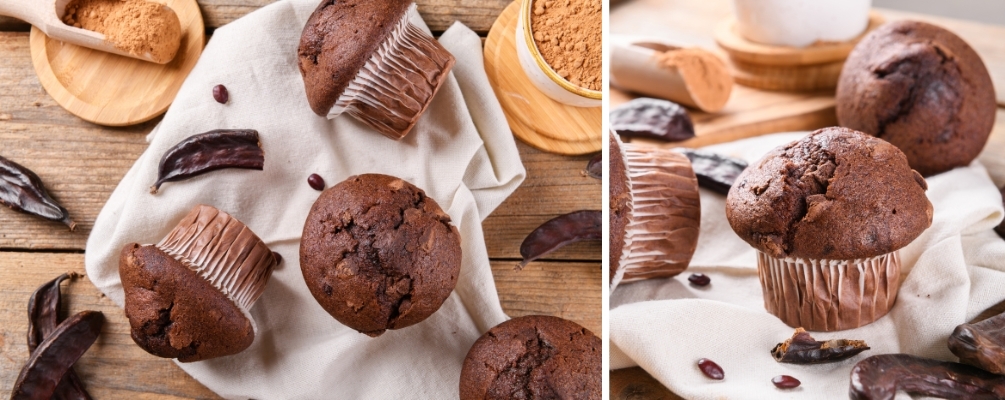
Carob powder is a versatile ingredient that can be used in sweet recipes and drinks.
Try adding it to:
- Cakes
- Muffins
- Biscuits
- Brownie-style slices
- Raw desserts
- Bliss balls
- Smoothies
- Milkshakes
- Porridge
- Overnight oats
- Pancakes
- Homemade granola
- Yoghurt
- Warm milk drinks
- Dessert sauces
- Carob pairs particularly well with:
- Coconut
- Dates
- Banana
- Almonds
- Cashews
- Vanilla
- Cinnamon
- Maple syrup
- Nut and seed butters
For inspiration, try our Carob Coconut Rough or Carob-Dipped Strawberries.
How to Make a Carob Drink
Carob powder can be used to make a caffeine-free alternative to a cocoa-based drink.
For a simple warm carob drink:
- Add one to two teaspoons of carob powder to a mug.
- Mix it with a small amount of warm water to form a smooth paste.
- Add warm dairy or plant-based milk.
- Stir until completely combined.
- Add cinnamon, vanilla or sweetener if desired.
Because carob is naturally sweet, taste the drink before adding extra sweetener.
For a cold drink, blend carob powder with chilled milk, banana and ice.
Is Carob Powder Healthy?
Carob powder can be included as part of a varied and balanced diet. It is naturally caffeine-free, very low in fat and provides plant protein and naturally occurring dietary fibre.
However, carob powder also contains naturally occurring sugars. “No added sugar” does not mean that the ingredient itself is sugar-free.
Whether carob is suitable for you depends on the amount consumed, the complete recipe and your individual dietary requirements.
Carob powder should not be treated as a cure or treatment for a health condition.
Does Carob Powder Contain Sugar?
Carob powder contains naturally occurring sugars from the carob pod. Honest to Goodness Organic Carob Powder contains no added sugar, but its nutrition information lists approximately 51g of total sugars per 100g.
In most recipes, carob powder is used in much smaller amounts than 100g. Its natural sweetness may also allow you to reduce some of the added sugar or syrup in the recipe.
Always distinguish between:
- Naturally occurring sugar: already present within the carob pod
- Added sugar: incorporated during manufacturing or preparation
Check packaged carob chips, bars and spreads carefully, as they may contain added sugar, fats or milk ingredients.
Is Carob Powder Gluten-Free?
Pure carob powder does not naturally contain gluten.
People with coeliac disease or a diagnosed gluten-related condition should still check the product label for allergen information and possible cross-contact warnings.
Honest to Goodness Organic Carob Powder contains 100% organic carob powder and currently has no declarable allergens.
Is Carob Powder Vegan?
Pure carob powder is plant-based and suitable for vegetarian and vegan diets.
Carob products such as chips, bars, spreads or coated snacks may contain milk, whey or other animal-derived ingredients. Always check the complete ingredient list rather than assuming every carob product is vegan.
Does Carob Powder Contain Nuts?
Carob is not a nut. It comes from the pod of a carob tree, which belongs to the legume family.
Pure carob powder does not naturally contain tree nuts or peanuts. However, cross-contact can occur during manufacturing, so people with food allergies should always follow the allergen statement on the product packaging.
How to Store Carob Powder
To help maintain freshness:
- Store carob powder in an airtight container.
- Keep it in a cool, dry pantry.
- Protect it from moisture and direct sunlight.
- Use a clean, dry spoon.
- Reseal the package after every use.
- Follow the best-before date on the packaging.
Carob powder can absorb moisture and odours, so storing it securely will help preserve its flavour and texture.
Frequently Asked Questions
- Is carob a type of chocolate?
No. Carob and chocolate come from different plants. Carob powder is made from carob pod pulp, while chocolate is made from cacao beans. - Does carob taste exactly like chocolate?
No. Carob has a sweet, earthy and malted flavour. It can be used in similar recipes, but it does not have the same rich or bitter flavour as chocolate. - Is carob powder naturally sweet?
Yes. Carob pod pulp naturally contains sugars, giving carob powder a sweeter taste than unsweetened cocoa powder. - Does carob powder contain caffeine?
Pure carob powder is naturally caffeine-free. - Can children have carob powder?
Carob powder can be used as a food ingredient, but its suitability depends on the child’s age, allergies and overall diet. Parents and carers should seek professional advice when necessary. - Can carob replace cocoa in brownies?
Yes, although the brownies will taste sweeter and less chocolatey. Start with a 1:1 substitution and consider reducing the other sweeteners. - Can carob powder be eaten without cooking?
Roasted carob powder can be added directly to smoothies, yoghurt, bliss balls and other no-bake recipes. - Is carob powder keto-friendly?
Carob powder contains a significant amount of carbohydrate and naturally occurring sugar. Whether it fits a particular eating plan depends on the serving size and individual carbohydrate targets. - Can dogs eat carob?
Pure carob does not contain the same theobromine found in chocolate and is sometimes used in specially formulated dog treats. However, pet products can contain other unsuitable ingredients, and dietary changes should be discussed with a veterinarian.
Final Thoughts
Carob powder is a naturally sweet, caffeine-free ingredient made from roasted and ground carob pod pulp. Its sweet, earthy and malted flavour makes it a versatile addition to baking, smoothies, warm drinks and homemade desserts.
While it can replace cocoa powder in many recipes, carob has its own distinctive flavour and should not be expected to taste exactly like chocolate.
Explore our Australian-grown Organic Carob Powder, made from 100% organic roasted carob with no added sugar, artificial colours, flavours or preservatives.