Bi-carb soda and baking powder are both raising agents used to help baked goods rise, but they are not the same ingredient.
Bi-carb soda is 100% sodium bicarbonate and needs moisture and an acidic ingredient to activate it. Baking powder contains sodium bicarbonate together with an acid and usually a starch, so it does not rely entirely on another acidic ingredient in the recipe.
Using the correct raising agent- and the correct quantity- can make the difference between light, evenly risen baking and a finished product that is flat, dense or unpleasantly alkaline.
What Is Bi-Carb Soda?
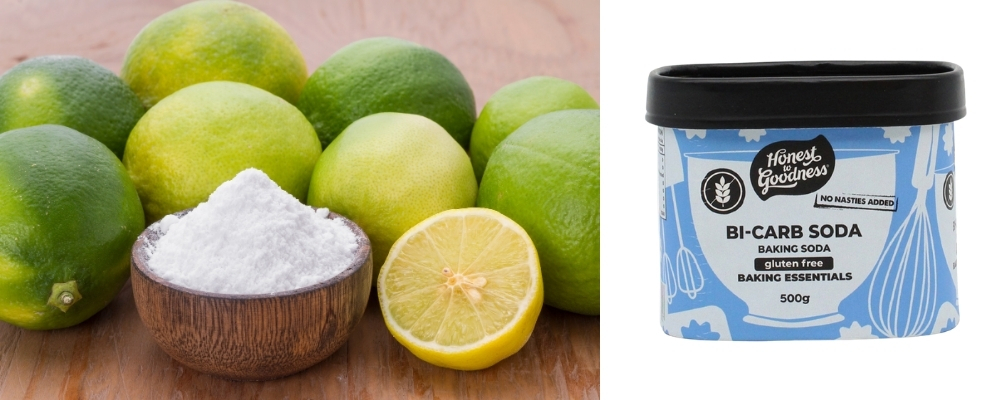
Bi-carb soda is a fine, white alkaline powder made from sodium bicarbonate.
It is also known as:
- Bicarbonate of soda
- Baking soda
- Sodium bicarbonate
- Bicarb
- Bi-carb
- These names refer to the same basic ingredient. “Baking soda” is more commonly used in American recipes, while “bi-carb soda” or “bicarbonate of soda” is more common in Australia and the United Kingdom.
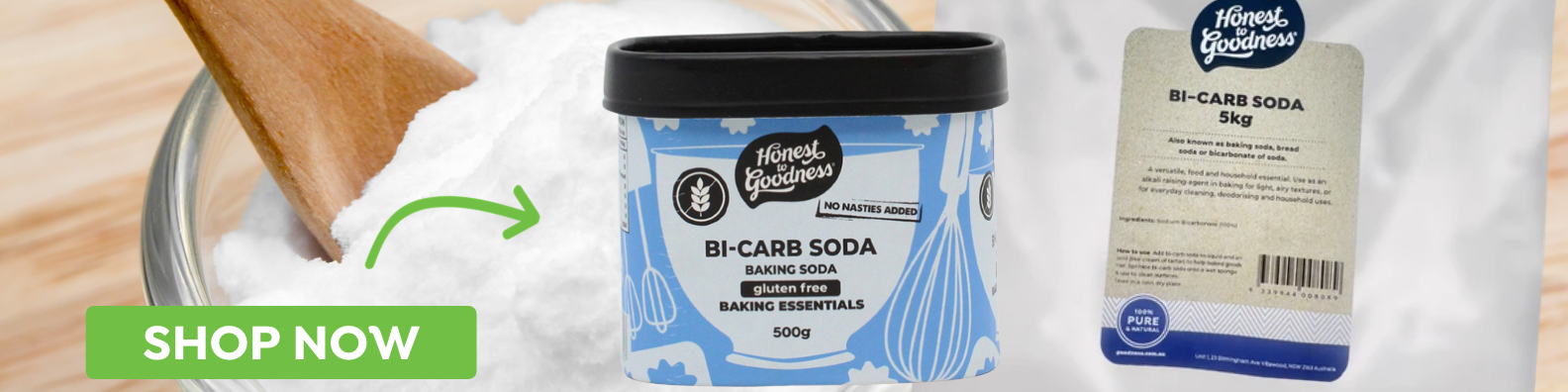
Honest to Goodness Bi-Carb Soda contains 100% sodium bicarbonate with no added anti-caking agents or aluminium-based additives.
Is Baking Soda the Same as Bi-Carb Soda?
Yes. Baking soda, bi-carb soda and bicarbonate of soda are different names for sodium bicarbonate.
If an American recipe calls for baking soda, Australian bakers can use bi-carb soda in the same quantity.
However, baking soda is not the same as baking powder. Baking powder contains sodium bicarbonate along with an acidic component and usually a starch.
What Is Baking Powder?
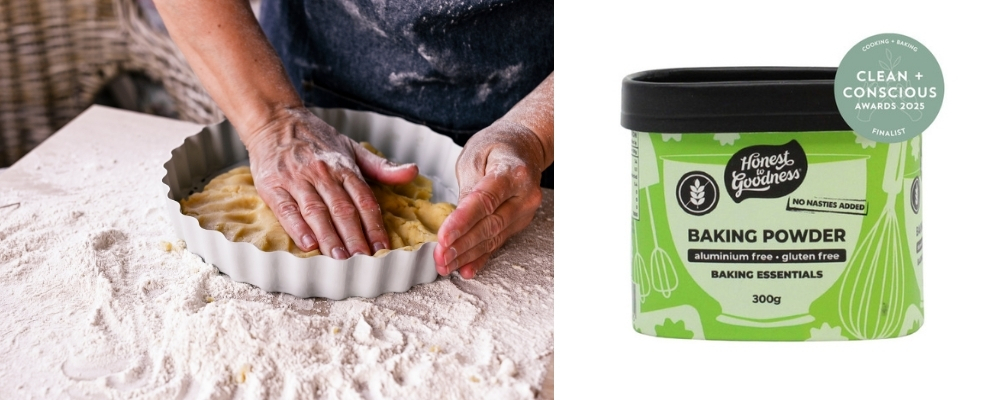
Baking powder is a prepared raising agent containing both an alkaline ingredient and an acidic ingredient.
When baking powder is combined with liquid, the alkaline and acidic components react and release carbon dioxide gas. These small gas bubbles expand within the batter or dough, helping the baked product rise.
Honest to Goodness Baking Powder is made from:
- Cream of tartar
- Sodium bicarbonate
- Rice flour
The rice flour helps keep the ingredients separated and reduces clumping during storage.
Always check the label, as baking-powder formulations can differ between brands.
Bi-Carb Soda vs Baking Powder
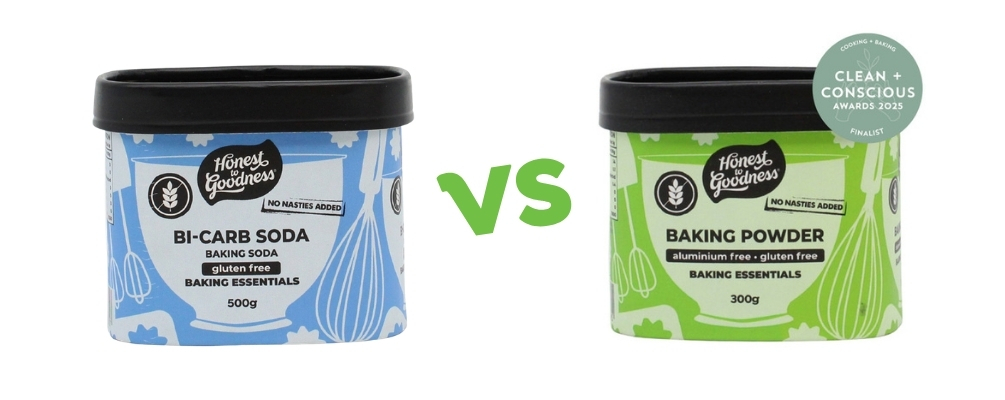
The main difference is that bi-carb soda needs an acid from the recipe, while baking powder already contains an acidic component.
|
|
Bi-Carb Soda |
Baking Powder |
|
Main composition |
100% sodium bicarbonate |
Sodium bicarbonate, acid and usually starch |
|
Needs acid in the recipe |
Yes |
Not necessarily |
|
Strength |
More concentrated |
Less concentrated |
|
Flavour if overused |
Soapy, bitter or alkaline |
Can become bitter or metallic depending on formulation |
|
Common uses |
Recipes containing acidic ingredients |
Cakes, muffins, scones and recipes without enough natural acidity |
|
Other household uses |
Cleaning and deodorising |
Primarily used in baking |
They are not directly interchangeable in equal quantities.
How Does Bi-Carb Soda Work in Baking?
Bi-carb soda is alkaline. When it is combined with moisture and an acidic ingredient, a chemical reaction produces carbon dioxide gas.
The gas forms small bubbles throughout the batter or dough. During baking, these bubbles expand and help create a lighter texture.
Common acidic ingredients that can activate bi-carb soda include:
- Lemon juice
- Vinegar
- Buttermilk
- Yoghurt
- Sour cream
- Molasses
- Natural cocoa powder
- Cream of tartar
- Some fruit purées
The recipe must contain enough acid to balance the bi-carb soda. If too much bi-carb is used, the finished product may taste bitter, soapy or alkaline.
How Does Baking Powder Work?
Baking powder contains both sodium bicarbonate and an acid. Once liquid is added, these ingredients begin reacting and releasing carbon dioxide gas.
Some baking powders are described as double-acting. These products release some gas when mixed with liquid and more gas when exposed to heat in the oven.
Because baking powder already contains an acidic component, it is commonly used in recipes that do not contain enough natural acid to activate bi-carb soda by itself.
When Should You Use Bi-Carb Soda?
Use bi-carb soda when the recipe contains an acidic ingredient and has been formulated to use sodium bicarbonate.
It is commonly found in recipes such as:
- Banana bread
- Muffins
- Cakes containing yoghurt or buttermilk
- Gingerbread
- Biscuits
- Pancakes
- Recipes containing molasses
- Recipes containing natural cocoa
- Soda bread
Bi-carb soda can also affect browning and spreading. This is why biscuits made with bi-carb may brown or spread differently from those made only with baking powder.
For reliable results, follow the recipe rather than adding extra bi-carb soda in the hope of creating more rise.
When Should You Use Baking Powder?
Baking powder is commonly used when the recipe does not contain enough acidic ingredients to activate bi-carb soda.
It is often used in:
- Cakes
- Cupcakes
- Muffins
- Scones
- Pancakes
- Pikelets
- Biscuits
- Quick breads
Some recipes use both baking powder and bi-carb soda. This may be necessary when the recipe needs additional lift while also balancing acidic ingredients.
Why Do Some Recipes Use Both?
A recipe may use both bi-carb soda and baking powder when one raising agent cannot achieve the desired result by itself.
The bi-carb soda can help neutralise acidity, influence browning and contribute to flavour and texture. Baking powder can provide additional lift.
This is common in recipes containing acidic ingredients but not enough acid to activate all the raising power needed for the finished bake.
Do not remove one of the raising agents simply because the recipe includes both. Each may have a separate purpose.
Can You Substitute Baking Powder for Bi-Carb Soda?
Baking powder can sometimes replace bi-carb soda, but it is weaker and contains additional ingredients.
A common starting point is to use approximately three times as much baking powder as bi-carb soda. For example:
- ½ teaspoon bi-carb soda → approximately 1½ teaspoons baking powder
However, the substitution can affect:
- Flavour
- Browning
- Texture
- Spreading
- Acidity
- Sodium content
The result may not be identical to the original recipe. For recipes that rely heavily on bi-carb soda, it is better to use the ingredient specified.
Can You Substitute Bi-Carb Soda for Baking Powder?
Bi-carb soda cannot usually replace baking powder by itself because it does not contain the acid needed to activate it.
To replace baking powder, bi-carb soda must be combined with an appropriate acidic ingredient, such as cream of tartar.
As a guide, Honest to Goodness recommends combining:
- ½ teaspoon cream of tartar
- ¼ teaspoon bi-carb soda
This produces approximately the raising power required in place of one teaspoon of baking powder.
Substitutions can still affect the recipe, so using the specified raising agent usually provides the most reliable result.
How Can You Tell If Bi-Carb Soda Is Still Active?
Bi-carb soda can lose effectiveness over time, especially if it has absorbed moisture during storage.
To test it:
- Place a small amount of bi-carb soda in a bowl.
- Add a splash of vinegar or lemon juice.
- Look for immediate, vigorous bubbling.
Strong bubbling shows that the bi-carb soda is reacting with the acid.
If the reaction is weak, the product may no longer provide sufficient lift in baking.
How Can You Tell If Baking Powder Is Still Active?
To test baking powder:
- Place a small amount in a bowl.
- Add warm or hot water.
- Look for immediate bubbling or foaming.
Baking powder already contains an acidic component, so it should react with water without requiring vinegar or lemon juice.
Keep both products tightly sealed and protected from moisture.
Is Bi-Carb Soda Gluten-Free?
Pure sodium bicarbonate is naturally gluten-free.
However, people with coeliac disease or a diagnosed gluten-related condition should check the product label for cross-contact information.
Baking powder contains additional ingredients, including starch, so its gluten-free suitability depends on the complete formulation.
Honest to Goodness Bi-Carb Soda contains 100% sodium bicarbonate and is listed as gluten-free.
Does Bi-Carb Soda Contain Aluminium?
Pure bi-carb soda is sodium bicarbonate and does not require aluminium as an ingredient.
Confusion can arise because some baking powders may use aluminium-based acidic compounds. Bi-carb soda and baking powder are different products, so claims about aluminium in one should not automatically be applied to the other.
Honest to Goodness Bi-Carb Soda contains 100% sodium bicarbonate with no aluminium-based additives.
Can Bi-Carb Soda Be Used for Cleaning?
Yes. Bi-carb soda’s mild alkalinity and fine texture make it useful for deodorising and cleaning some household surfaces.
It is commonly used for:
- Absorbing odours
- Cleaning sinks
- Removing food residue
- Cleaning some cookware
- Freshening rubbish bins
- Deodorising carpets
- Making a gentle cleaning paste
Always test it on an inconspicuous area first. Its mildly abrasive texture may not suit delicate, polished or easily scratched surfaces.
For more household applications, read 10 Ways With Bi-Carb Soda.
Can You Mix Bi-Carb Soda and Vinegar?
Bi-carb soda and vinegar react immediately, producing carbon dioxide gas, water and sodium acetate.
The fizzing action may help loosen some physical debris, but the acid and alkaline ingredients also begin neutralising one another. Mixing them does not automatically create a stronger long-lasting cleaner.
Never combine bi-carb soda and vinegar in a sealed container. The carbon dioxide gas can build pressure and cause the container to burst.
If using them for a cleaning task, allow the reaction to occur in an open, ventilated area and follow instructions appropriate for the surface.
Can You Eat Bi-Carb Soda?
Food-grade bi-carb soda is used in small amounts in cooking and baking. However, it contains a significant amount of sodium and should not be eaten by the spoonful or used as a health treatment without professional medical advice.
Consuming excessive sodium bicarbonate can cause serious side effects and may interact with health conditions or medicines.
Use bi-carb soda only in the quantity specified by a recipe. Speak with a healthcare professional before using sodium bicarbonate for indigestion, exercise performance or any other health purpose.
How to Store Bi-Carb Soda
To preserve its effectiveness:
- Store it in an airtight container.
- Keep it in a cool, dry pantry.
- Protect it from moisture and strong odours.
- Use a clean, dry spoon.
- Keep food-use bi-carb separate from cleaning supplies.
- Follow the best-before date on the packaging.
Bi-carb soda absorbs odours and moisture, so an open container used for deodorising should not later be used for cooking.
Frequently Asked Questions
- Is bi-carb soda the same as baking soda?
Yes. Bi-carb soda, bicarbonate of soda and baking soda are different names for sodium bicarbonate. - Is bi-carb soda the same as baking powder?
No. Bi-carb soda is sodium bicarbonate. Baking powder contains sodium bicarbonate together with an acid and usually a starch. - Why did my cake taste like bi-carb soda?
The recipe may have contained too much bi-carb soda or insufficient acid to neutralise it. Measure carefully and follow the recipe. - Can I leave bi-carb soda out of a recipe?
Removing it may affect the rise, texture, colour and flavour. Use the specified ingredient whenever possible. - Why does bi-carb soda make baking rise?
It reacts with acid and moisture to release carbon dioxide gas. These bubbles expand and help create a lighter texture. - Does bi-carb soda expire?
It can gradually lose effectiveness, particularly after exposure to moisture. Test it with vinegar or lemon juice if you are unsure. - Can I use self-raising flour instead of bi-carb soda?
Not directly. Self-raising flour contains flour and a raising agent, so replacing bi-carb with it would change the balance of several ingredients. - Can bi-carb soda clean an oven?
A paste of bi-carb soda and water can help loosen some baked-on food and grease. Check your oven manufacturer’s cleaning instructions before applying it. - Can bi-carb soda remove odours?
Yes. It can help absorb some odours in bins, carpets, shoes and refrigerators. Do not reuse deodorising bi-carb for food preparation. - Can I brush my teeth with bi-carb soda?
Bi-carb soda can be abrasive and should not replace properly formulated toothpaste or professional dental advice. Ask a dental professional before using DIY whitening or cleaning methods.
Final Thoughts
Bi-carb soda and baking powder are both useful raising agents, but they perform different roles.
Bi-carb soda is 100% sodium bicarbonate and requires moisture and acid to activate it. Baking powder already contains both alkaline and acidic components, making it suitable for recipes without enough natural acidity.
Because their strength and composition differ, they should not be exchanged in equal quantities. Following the recipe and measuring accurately will provide the most reliable flavour, texture and rise.
Explore our Bi-Carb Soda, made from 100% sodium bicarbonate with no anti-caking agents or aluminium-based additives. It is suitable for baking, cooking, deodorising and a wide range of household cleaning applications.