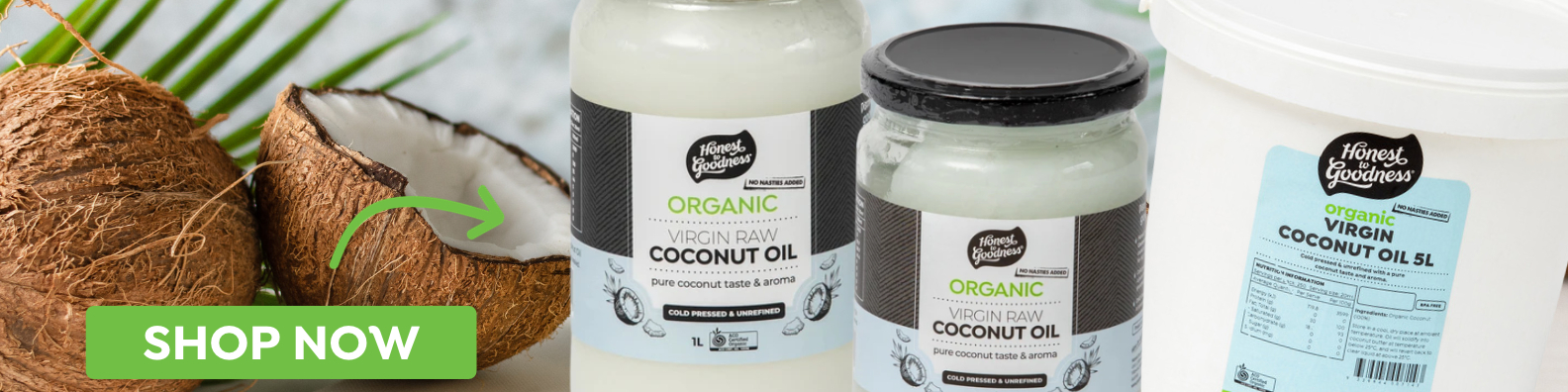
Coconut oil is an edible oil extracted from the white flesh of mature coconuts. Known for its natural coconut flavour, smooth texture and versatility, it is commonly used in cooking, baking, raw desserts and homemade beauty treatments.
Virgin coconut oil is produced with minimal processing, helping it retain its characteristic coconut flavour and aroma. It is generally solid or semi-solid in cooler conditions and becomes liquid when warmed.
Available in conventional and certified organic varieties, coconut oil can be used in curries, baked goods, roasted dishes, desserts and many other recipes.
Where Does Coconut Oil Come From?

Coconut oil comes from mature coconuts harvested from the coconut palm, also known as Cocos nucifera. Coconut palms grow in warm, tropical regions, particularly throughout Southeast Asia, South Asia and the Pacific.
Once harvested, the coconuts are opened and the white flesh is separated from the shell. Oil is then extracted from the coconut flesh using a method that depends on the type of coconut oil being produced.
Virgin coconut oil is generally made from fresh coconut flesh using minimal processing. Purified or deodorised coconut oil is produced differently to create an oil with minimal coconut flavour and aroma.
What Is Organic Coconut Oil?
Organic coconut oil is produced from coconuts grown and processed according to certified organic standards.
Organic certification relates to the way the coconuts are cultivated, handled and processed. It does not mean that organic coconut oil contains less fat or saturated fat than conventional coconut oil.
When choosing an organic coconut oil, check whether the product is virgin or purified/deodorised, as this will affect its flavour, aroma and most suitable uses.
How Is Virgin Coconut Oil Made?
Virgin coconut oil is generally made from fresh coconut flesh rather than dried coconut flesh, known as copra.
The fresh coconut flesh is cold-pressed using minimal heat and processing to extract the oil. This helps preserve its natural coconut flavour and aroma. Once extracted, the oil is filtered and packaged.
The exact production method may vary between suppliers, so always check the product information if you require details about a particular coconut oil.
What Does Virgin Coconut Oil Taste Like?
Virgin coconut oil has a smooth texture with a natural coconut flavour and aroma. Its intensity can vary, but it generally adds a mild tropical richness to sweet and savoury recipes.
Its coconut flavour works particularly well in:
- Curries
- Stir-fries
- Cakes and muffins
- Biscuits
- Raw slices
- DIY deodorant
- Roasted vegetables
- Dipping
When a recipe requires the properties of coconut oil without a noticeable coconut flavour, purified/deodorised coconut oil may be a better choice.
Virgin vs Purified/Deodorised Coconut Oil
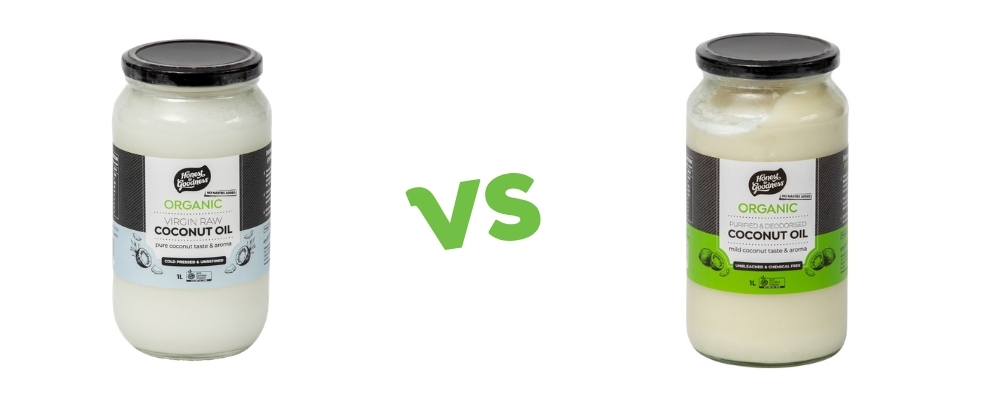
The two main varieties are virgin coconut oil and refined coconut oil. At Honest to Goodness, our refined variety is called Purified/Deodorised Coconut Oil because it is purified and steam-deodorised to minimise its coconut flavour and aroma.
|
|
Virgin Coconut Oil |
Purified/Deodorised Coconut Oil |
|
Coconut Source |
Fresh coconut flesh |
Quick-dried coconut flesh |
|
Processing |
Cold-pressed with minimal processing |
Expeller-pressed, purified and steam-deodorised |
|
Flavour |
Natural coconut flavour |
Minimal coconut flavour |
|
Aroma |
Noticeable coconut aroma |
Minimal coconut aroma |
|
Smoke Point |
Approximately 175°C |
Approximately 230°C |
|
Best For |
Baking, curries, desserts and moderate-temperature cooking |
Higher-temperature cooking, frying and neutral-flavoured recipes |
Choose purified/deodorised coconut oil when you need a neutral-tasting oil or are cooking at higher temperatures.
For more information about how it is produced, read our guide: What Is Purified & Deodorised Coconut Oil?
Virgin vs Extra Virgin Coconut Oil
Unlike olive oil, there is no widely recognised standard that clearly distinguishes virgin coconut oil from extra virgin coconut oil.
Both terms are commonly used for coconut oil made from fresh coconut flesh with minimal processing. The term “extra virgin” does not necessarily indicate a higher grade or a meaningful nutritional difference.
When comparing coconut oils, look beyond the product name and check:
- The extraction method
- Whether the oil is cold-pressed
- The ingredient list
- Organic certification
- Country of origin
- Recommended uses
- Flavour and aroma
Coconut Oil Nutrition
Coconut oil is almost entirely composed of fat and is particularly high in saturated fat. It does not provide meaningful amounts of carbohydrates, protein or dietary fibre.
Typical Nutritional Characteristics
|
Nutritional characteristic |
Found in coconut oil |
|
Fat |
✓ |
|
Saturated fat |
✓ |
|
Carbohydrates |
— |
|
Protein |
— |
|
Dietary fibre |
— |
|
Naturally lactose-free |
✓ |
|
Naturally plant-based |
✓ |
Because coconut oil is energy-dense and high in saturated fat, it is generally best used in moderate quantities as part of a varied diet.
The exact nutritional values may vary slightly between products. Always check the nutrition information panel on the packaging.
What Is Coconut Oil Good For?
Coconut oil is primarily valued for its versatility, texture and distinctive flavour. It can be used for:
- Cooking and sautéing
- Baking
- Roasting vegetables
- Making curries
- Preparing raw slices and desserts
- Homemade granola
- Greasing baking trays
- Replacing butter in some plant-based recipes
- Homemade hair treatments
- Moisturising dry skin
Its ability to become firm in cooler conditions also makes coconut oil useful in raw desserts, no-bake slices and chocolate-style coatings.
Coconut oil should not be considered a treatment or cure for a health condition.
How to Use Coconut Oil
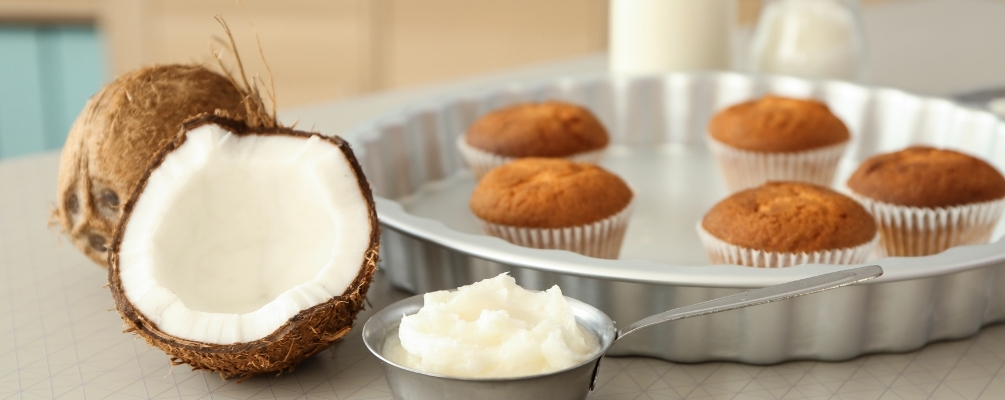
Virgin coconut oil can be incorporated into many everyday meals and recipes.
Try using it in:
- Cakes and muffins
- Biscuits
- Pancakes
- Curries
- Stir-fries
- Roasted vegetables
- Homemade granola
- Raw slices
- Energy balls
- Plant-based desserts
- Chocolate-style coatings
- Popcorn
For higher-temperature cooking or recipes where you do not want a coconut flavour, consider using Organic Purified/Deodorised Coconut Oil.
Always follow the recommended cooking temperatures printed on the product packaging.
Can Coconut Oil Replace Butter?
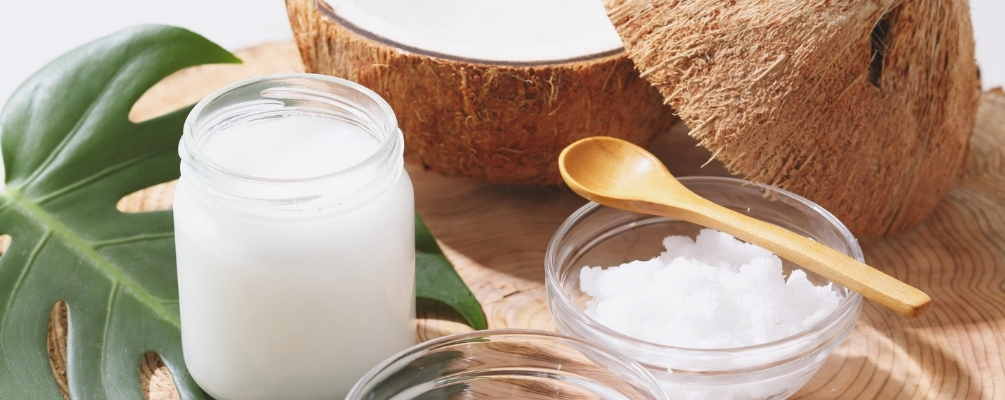
Coconut oil can replace butter in many cooking and baking recipes, particularly plant-based recipes.
Use solid coconut oil when a recipe requires a firm fat or melted coconut oil when a recipe calls for melted butter or liquid oil.
However, coconut oil contains almost no water, while butter naturally contains some water. The texture of the finished recipe may therefore be slightly different.
Virgin coconut oil can also add a noticeable coconut flavour. If you want a more neutral result, purified/deodorised coconut oil may be more suitable.
Is Coconut Oil Good for You?
Coconut oil can be included in a varied and balanced diet, but it is best consumed in moderation.
Coconut oil is high in saturated fat. Eating too much saturated fat can raise LDL cholesterol, which is associated with a higher risk of heart disease. The Australian Heart Foundation recommends choosing oils higher in unsaturated fats for regular everyday use.
Coconut oil can still be enjoyed when its flavour, texture or cooking properties suit a particular recipe. Your overall eating pattern is more important than any single ingredient.
People with high cholesterol, heart disease or specific dietary requirements should follow advice from their healthcare professional.
Is Eating a Spoonful of Coconut Oil Good for You?
There is no strong evidence that eating a spoonful of coconut oil provides special health benefits.
A spoonful of coconut oil contains concentrated fat and a significant amount of saturated fat without providing meaningful protein or dietary fibre.
Rather than consuming coconut oil directly as a supplement, it is generally better used in moderate amounts as an ingredient in cooking or baking.
If you are concerned about cholesterol, heart health or dietary fat intake, speak with a GP or accredited practising dietitian.
Does Coconut Oil Help with Weight Loss?
There is no strong evidence that simply adding coconut oil to your diet causes weight loss.
Coconut oil is energy-dense. Adding spoonfuls of coconut oil to drinks or meals without reducing energy elsewhere may increase your overall energy intake.
Maintaining a healthy weight depends on your overall eating pattern, activity level and individual health needs rather than one particular food or ingredient.
Is Coconut Oil Good for Hair?
Coconut oil is commonly used as a conditioning treatment for dry hair. It can coat the hair and help it feel smoother, softer and shinier.
To use coconut oil on your hair:
- Warm a small amount between your hands.
- Apply it sparingly to the lengths and ends.
- Leave it on briefly or use it as a pre-wash treatment.
- Shampoo thoroughly to remove the oil.
Coconut oil may feel too heavy for fine or oily hair and may not suit every hair type. It has also not been proven to make hair grow faster or treat medical causes of hair loss.
Stop using it if irritation occurs and seek professional advice for persistent hair or scalp concerns.
Is Coconut Oil Good for Skin?
Coconut oil is sometimes used as a moisturising oil for dry skin. It creates a barrier on the skin that may help reduce moisture loss.
However, coconut oil may not suit every skin type. It can feel heavy and may contribute to blocked pores for some people, particularly when applied to the face.
Before using coconut oil on your skin:
- Perform a patch test first.
- Avoid applying it to broken or irritated skin.
- Stop using it if redness, itching or discomfort occurs.
- Seek professional advice for eczema, acne or persistent skin concerns.
Coconut oil should not replace sunscreen or prescribed skincare treatments.
Is Coconut Oil an Allergen?
Coconut is botanically classified as a drupe rather than a true tree nut. However, coconut allergies can occur.
People with a diagnosed coconut allergy should avoid coconut oil unless advised otherwise by their healthcare professional.
Pure coconut oil is naturally:
- Gluten free
- Dairy free
- Lactose free
- Soy free
- Vegan
Always check the product label, particularly for flavoured, infused or blended coconut oils that may contain other ingredients or allergen warnings.
How to Store Coconut Oil
To help maintain freshness:
- Keep coconut oil in a cool, dry pantry.
- Store it away from direct sunlight and excessive heat.
- Keep the container tightly closed.
- Use a clean, dry utensil when removing the oil.
- Follow the best-before date and storage instructions on the packaging.
Coconut oil naturally becomes solid in cooler conditions and liquid in warmer conditions. This change is normal and does not indicate that the oil has spoiled.
If liquid coconut oil is required, place the closed container in a bowl of warm water until the oil softens.
Frequently Asked Questions
- Can you eat coconut oil every day?
Coconut oil can be included in a varied diet, but it is high in saturated fat. It is best used in moderate amounts rather than treated as a daily health supplement. - Is organic coconut oil healthy?
Organic certification refers to how the coconuts are grown and processed. Organic coconut oil remains high in saturated fat and should be enjoyed in moderation. - Can you eat coconut oil straight from the jar?
Coconut oil is edible but eating it directly does not offer proven advantages over using it in food. A spoonful provides concentrated fat and energy. - Does coconut oil need to be refrigerated?
Coconut oil generally does not need refrigeration. Store it in a cool, dry place with the lid tightly closed. - Why has my coconut oil turned solid?
Coconut oil naturally solidifies at cooler temperatures. It will return to a liquid state when warmed. - Can coconut oil be used for frying?
Coconut oil can be used for some frying and sautéing. Virgin coconut oil has a lower smoke point than purified/deodorised coconut oil, so choose the variety suited to your cooking temperature. - Is coconut oil vegan?
Yes. Pure coconut oil is plant-based and suitable for vegetarian and vegan diets. - Is coconut oil gluten free?
Pure coconut oil is naturally gluten free. People with coeliac disease or severe allergies should still check the product label and manufacturing information. - What is the difference between virgin and purified coconut oil?
Virgin coconut oil retains its natural coconut flavour and aroma. Purified/deodorised coconut oil has minimal coconut flavour and a higher smoke point, making it more suitable for higher-temperature cooking. - Does virgin coconut oil expire?
Virgin coconut oil has a best-before date and can eventually deteriorate. Keep it tightly sealed and discard it if it develops an unusual smell, flavour or appearance.
Final Thoughts
Virgin coconut oil is a versatile pantry ingredient made from fresh coconut flesh using minimal processing. Its natural coconut flavour and smooth texture make it suitable for baking, curries, roasted dishes, raw desserts and many plant-based recipes.
While coconut oil can be enjoyed as part of a varied diet, it is high in saturated fat and is best used in moderate amounts rather than consumed for claimed health benefits.
Explore our Organic Virgin Coconut Oil for everyday cooking, baking and homemade recipes. If you prefer an oil with minimal coconut flavour or need an option for higher-temperature cooking, explore our Organic Purified/Deodorised Coconut Oil.