
White chocolate is typically made from cocoa butter, sugar, milk ingredients and vanilla. Unlike milk and dark chocolate, it does not contain cocoa solids - the part of the cocoa bean responsible for chocolate’s brown colour and stronger cocoa flavour.
Because it contains cocoa butter derived from cocoa beans, white chocolate is still considered a type of chocolate. Dairy-free alternatives replace milk ingredients with suitable plant-based ingredients.
What exactly is in white chocolate?
The main ingredients found in traditional white chocolate are:
- Cocoa butter: The natural fat extracted from cocoa beans, responsible for white chocolate’s smooth texture.
- Sugar: Provides its characteristic sweetness.
- Milk ingredients: Milk powder or milk solids create the familiar creamy flavour.
- Vanilla: Adds a delicate aroma and flavour.
- Emulsifiers: Ingredients such as soy lecithin may be added to improve texture and consistency.
Ingredients differ between products. Some white chocolate may also contain vegetable fats, artificial flavours or other additives, so it is worth checking the ingredient list when choosing a product.
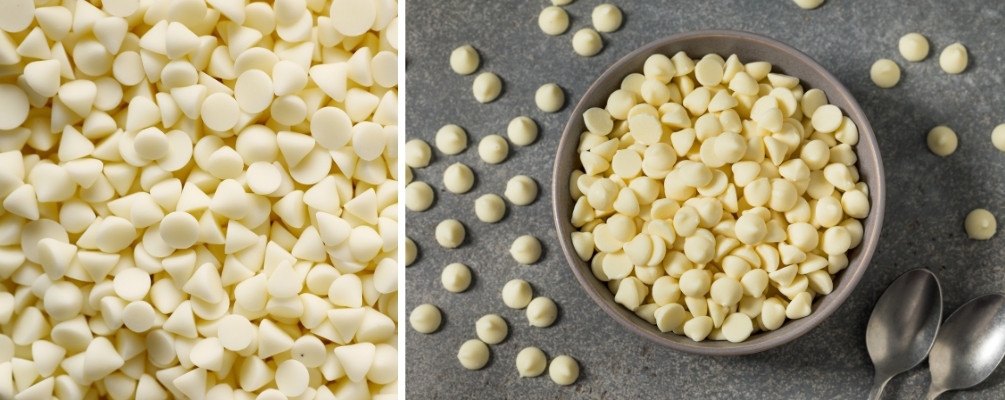
Is white chocolate made from real chocolate?
Yes, white chocolate is made with a component of the cocoa bean: cocoa butter.
Cocoa beans are processed into two important components:
- Cocoa solids, which provide the colour and deep cocoa flavour found in milk and dark chocolate.
- Cocoa butter, a pale-coloured fat that gives chocolate its smooth texture and melt-in-the-mouth quality.
White chocolate contains cocoa butter but no cocoa solids. This is why it has a pale ivory colour and a sweeter, creamier flavour than dark or milk chocolate.
Is white chocolate 0% chocolate?
No. White chocolate may contain no cocoa solids, but it contains cocoa butter derived from cocoa beans.
In white chocolate, the percentage generally refers to its cocoa-derived ingredients, primarily cocoa butter. Always check the product specifications to confirm exactly what the percentage represents.
Products made with cocoa butter generally provide a more recognisable white chocolate flavour and texture than confectionery made primarily with substitute vegetable fats.
White chocolate vs milk chocolate vs dark chocolate
|
Chocolate type |
Cocoa butter |
Cocoa solids |
Usually contains milk |
Typical flavour |
|
White chocolate |
Yes |
No |
Yes |
Sweet, creamy and vanilla-like |
|
Milk chocolate |
Yes |
Yes |
Yes |
Creamy with a mild cocoa flavour |
|
Dark chocolate |
Yes |
Yes |
Sometimes |
Rich and more intensely chocolatey |
Exact ingredients can vary, particularly for dairy-free, vegan-friendly and speciality chocolate products. Always check the product label if you have specific dietary requirements.
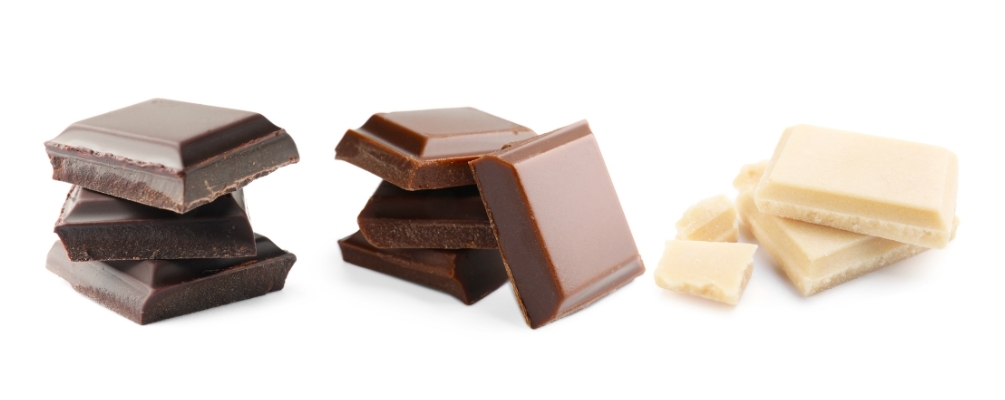
Is all white chocolate made with dairy?
Traditional white chocolate is usually made with milk powder or other dairy ingredients. However, dairy-free and vegan-friendly varieties are also available.
Dairy-free white chocolate may combine cocoa butter and sugar with plant-based ingredients, such as rice-derived powders, to create a smooth and creamy consistency without milk.
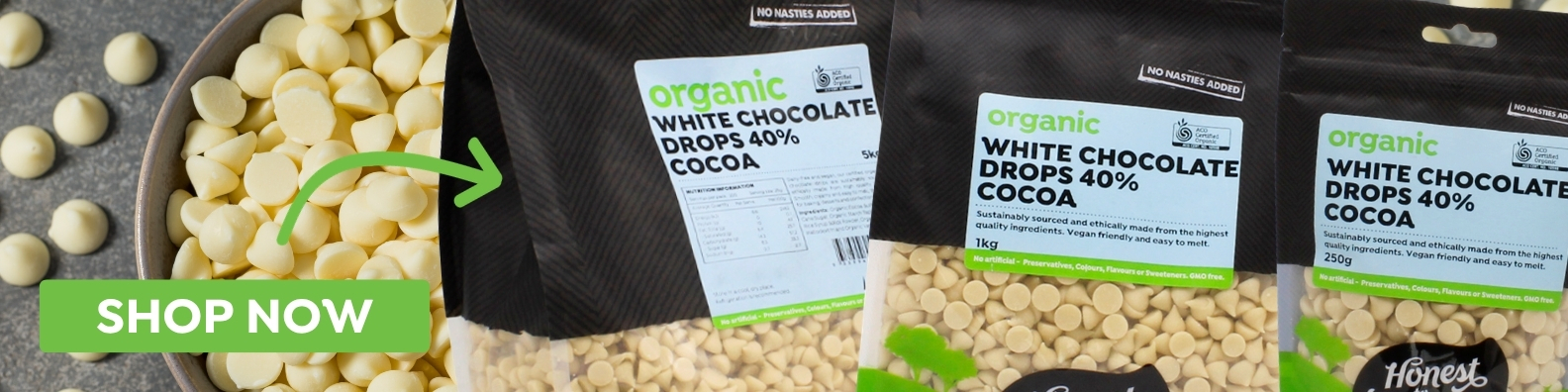
Our Organic White Chocolate Drops 40% are made with organic cocoa butter, organic cane sugar, organic tapioca starch, organic rice syrup solids powder, organic rice maltodextrin and organic vanilla powder. They contain no dairy, palm oil or soy lecithin, making them suitable for dairy-free and vegan-friendly cooking.
What can you make with white chocolate?
White chocolate’s sweet, creamy flavour pairs particularly well with tart fruit, toasted nuts and warmly flavoured baked goods. White chocolate drops can be used for:
- Cookies and biscuits
- Muffins and cakes
- Slices and brownies
- Cheesecakes and desserts
- Ganache and icing
- Dipping fresh or dried fruit
- Drizzling over baked treats
- Homemade chocolate bark
- Melting and coating
- Decorating cakes and desserts
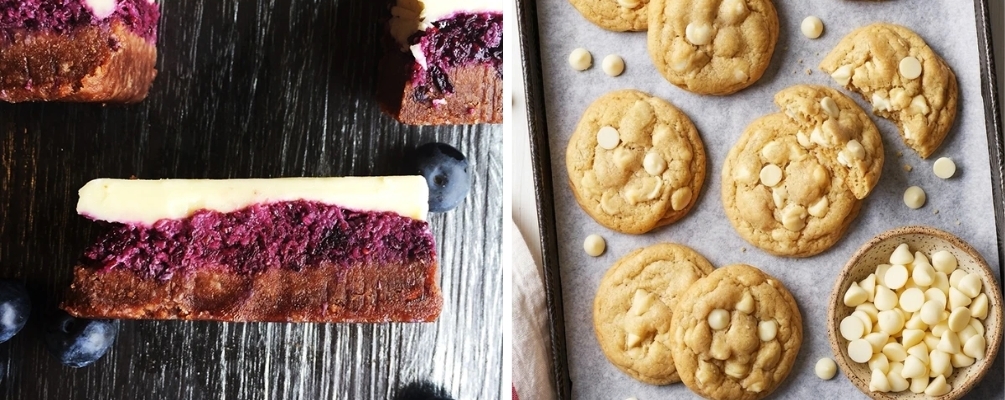
For an easy dessert idea, try our White Chocolate Chip Cookies or White Chocolate Berry Slice, which balances creamy white chocolate with the tart flavour of berries.
How do you melt white chocolate?
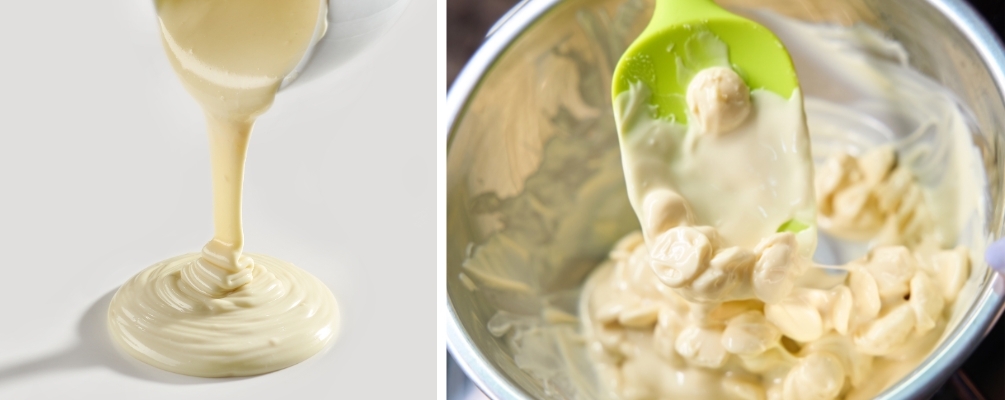
White chocolate should be melted gently because cocoa butter can be sensitive to excessive heat.
- Microwave method
Place the white chocolate drops in a clean, dry, microwave-safe bowl. Heat them in short intervals, stirring well between each interval until smooth. - Double-boiler method
Place the white chocolate in a heatproof bowl over a saucepan containing gently simmering water. Ensure the bowl does not touch the water. Stir gently until the chocolate has melted.
Avoid allowing water or steam to enter the bowl, as moisture can cause the melted chocolate to become thick or grainy.
How should white chocolate be stored?
Store white chocolate in a cool, dry place away from sunlight, moisture and strong odours. Ideally, it should be kept below 20°C and at a maximum relative humidity of 65%.
During warmer weather, white chocolate can be stored in a cool room or refrigerator. Keep it sealed to protect it from moisture and surrounding food odours.
White chocolate may soften or melt during delivery in hot weather. Changes caused by heat can affect its appearance and shape, although it may still be suitable for melting and baking when stored and handled correctly.
Is white chocolate healthy?
White chocolate is generally best enjoyed as a sweet treat rather than considered a health food. It usually contains cocoa butter and sugar, making it relatively energy dense.
Whether it suits your diet depends on the ingredients, portion size and your individual nutritional requirements. Checking the ingredient list can also help you choose a product that aligns with your preferences, such as organic, dairy-free, vegan-friendly or palm oil-free white chocolate.
Is there 100% white chocolate?
Pure cocoa butter is available, but it is not generally sold as ready-to-eat white chocolate. Cocoa butter by itself does not have the sweetness, vanilla flavour or creamy balance commonly associated with white chocolate.
White chocolate is normally made by combining cocoa butter with sugar and other ingredients. Therefore, a product containing 100% cocoa butter would be better described as pure cocoa butter rather than white chocolate.
Choosing white chocolate for baking
When selecting white chocolate for baking, check whether cocoa butter is one of the main ingredients. You may also want to consider:
- The percentage of cocoa butter
- Whether it contains dairy
- Whether it contains palm oil
- Whether soy lecithin or other emulsifiers are used
- Whether the ingredients are organic
- Whether it comes in an easy-to-melt format
Chocolate drops are convenient because they can be measured easily, stirred directly into baked goods or melted for coatings and desserts.
Our Organic White Chocolate Drops 40% are made with 100% organic ingredients and have a smooth, creamy vanilla flavour. They are suitable for baking, melting and dairy-free or vegan-friendly dessert recipes.
Frequently Asked Questions
- What is real white chocolate made from?
Real white chocolate is made with cocoa butter, sugar and usually milk ingredients and vanilla. Dairy-free versions replace the milk ingredients with plant-based alternatives. - Why is white chocolate white?
White chocolate has a pale ivory colour because it contains cocoa butter without the dark cocoa solids that give milk and dark chocolate their brown colour. - What flavours pair well with white chocolate?
White chocolate pairs particularly well with berries, citrus, coconut, vanilla, coffee, macadamias, pistachios, almonds and warming spices. - Is dairy-free?
Traditional white chocolate usually contains dairy. However, specially formulated dairy-free and vegan white chocolate products are available, so always check the ingredient list. - Is white chocolate vegan?
Not all white chocolate is vegan because conventional varieties commonly contain milk. Vegan-friendly white chocolate is made without dairy or other animal-derived ingredients. - What does 40% white chocolate mean?
In white chocolate, the percentage generally indicates the amount of cocoa-derived ingredients, primarily cocoa butter, contained in the product. - Can white chocolate be used instead of milk chocolate?
Yes, although it will produce a sweeter, creamier result without the cocoa flavour of milk chocolate. The two may also melt and behave differently depending on their ingredients.
![General Wholefoods [Supplier Spotlight]](https://cdn11.bigcommerce.com/s-dis4vxtxtc/images/stencil/160w/uploaded_images/general-wholefoods-1.jpg "General Wholefoods [Supplier Spotlight]")

![goodMix [Supplier Spotlight]](https://cdn11.bigcommerce.com/s-dis4vxtxtc/images/stencil/160w/uploaded_images/goodmix-thumbnail.jpg "goodMix [Supplier Spotlight]")