
What Is Spirulina Powder?
If you've ever browsed the superfood aisle, chances are you've come across spirulina powder. Known for its striking deep green colour and impressive nutritional profile, spirulina has become a popular ingredient in smoothies, breakfast bowls and wellness recipes around the world.
But what exactly is spirulina, and why has it earned such a strong reputation among health-conscious eaters?
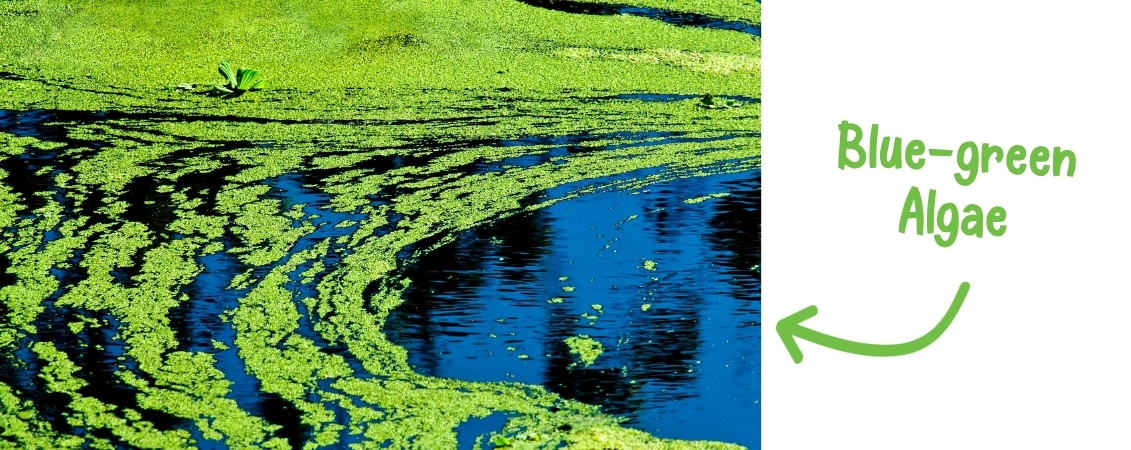
Spirulina is a naturally occurring blue-green algae (cyanobacteria) that grows in warm, alkaline freshwater lakes around the world. Unlike seaweed, which grows in the ocean, spirulina is cultivated in carefully managed freshwater environments to ensure purity and quality.
After harvesting, the spirulina is gently dried and finely milled into a vibrant green powder that can easily be mixed into food and drinks.
Although spirulina has gained popularity in recent years, it is far from a new food. Historical records suggest it has been consumed for hundreds of years by communities in Africa and Central America, where it was valued as a nutritious food source.
Today, organic spirulina powder is enjoyed worldwide for its versatility and naturally occurring nutrients, making it a convenient addition to modern diets.
Why Is Spirulina Considered a Superfood?
The term "superfood" isn't an official scientific classification, but it's commonly used to describe foods that are naturally rich in nutrients.
Spirulina is often included in this category because it contains a wide range of naturally occurring nutrients in a relatively small serving.
Depending on the growing conditions and production methods, spirulina may naturally provide:
- Plant-based protein
- Iron
- Chlorophyll
- Beta-carotene (a precursor to Vitamin A)
- Phycocyanin (its distinctive blue pigment)
- Magnesium
- Potassium
- Essential amino acids
Rather than relying on a single nutrient, spirulina offers a combination of naturally occurring compounds that can help increase the nutritional variety of everyday meals.
For many people, it's simply an easy way to add more nutrient-dense ingredients to smoothies, breakfasts and snacks.
What Is Spirulina Made From?
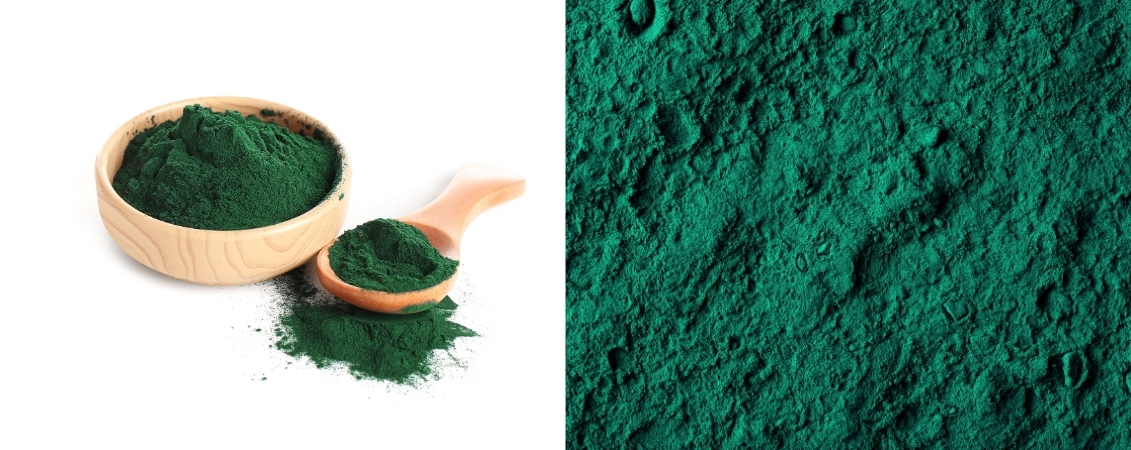
One common misconception is that spirulina is a type of seaweed.
In fact, spirulina is a microscopic organism known as Arthrospira, a spiral-shaped cyanobacterium that naturally grows in alkaline freshwater environments.
The production process is surprisingly simple:
- Spirulina is cultivated in controlled freshwater ponds.
- Once it reaches maturity, it is carefully harvested.
- Excess water is removed.
- The spirulina is dried at low temperatures to help preserve its nutritional qualities.
- It is milled into a fine powder before packaging.
- High-quality organic spirulina powder contains 100% pure spirulina without artificial colours, preservatives or fillers.
What Is Spirulina Good For?
Spirulina powder is valued for its naturally nutrient-rich profile. It contains plant protein, vitamins, minerals and antioxidant compounds, making it a popular ingredient in smoothies, juices and breakfast bowls. Rather than being used to treat or prevent disease, spirulina is best enjoyed as part of a varied and balanced diet.
People commonly include spirulina in their diets because it:
- Naturally contains plant protein
- Provides iron and other essential minerals
- Contains antioxidant compounds such as phycocyanin and beta-carotene
- Is easy to incorporate into everyday recipes
What Nutrients Are Found in Spirulina?
One of the reasons spirulina continues to attract attention is its naturally nutrient-rich composition.
While nutritional values vary slightly between producers, spirulina naturally contains a range of vitamins, minerals and beneficial plant compounds.
|
Naturally Occurring Nutrients |
Found in Spirulina |
|
Plant Protein |
✓ |
|
Iron |
✓ |
|
Chlorophyll |
✓ |
|
Beta-carotene |
✓ |
|
Magnesium |
✓ |
|
Potassium |
✓ |
|
Phycocyanin |
✓ |
|
Essential Amino Acids |
✓ |
Because spirulina is consumed in relatively small amounts, often around one teaspoon at a time, it's best viewed as a nutrient-rich addition to an already balanced diet rather than a primary source of nutrition.
What Makes Spirulina's Colour So Unique?
One of spirulina's most recognisable features is its rich emerald-green colour. This vibrant appearance comes from several naturally occurring pigments, including:
- Chlorophyll: Like leafy green vegetables, spirulina contains chlorophyll, the pigment responsible for photosynthesis.
- Phycocyanin : Phycocyanin is a naturally occurring blue pigment found almost exclusively in spirulina and a few related microorganisms. Combined with chlorophyll, it gives spirulina its distinctive blue-green appearance.
- Beta-carotene: Spirulina also contains beta-carotene, a naturally occurring orange-red pigment that contributes to its nutritional profile.
These natural pigments make spirulina a popular ingredient for colourful smoothie bowls, energy balls and vibrant green drinks.
What Does Spirulina TasteI Like?
Spirulina has a naturally earthy, slightly savoury flavour with subtle grassy notes. While its taste can be quite distinctive on its own, it pairs well with naturally sweet fruits such as banana, mango and pineapple, making it a popular addition to smoothies and smoothie bowls.
If you're trying spirulina for the first time, start with a small amount and gradually increase it according to the product's serving suggestions.
Green Spirulina vs Blue Spirulina
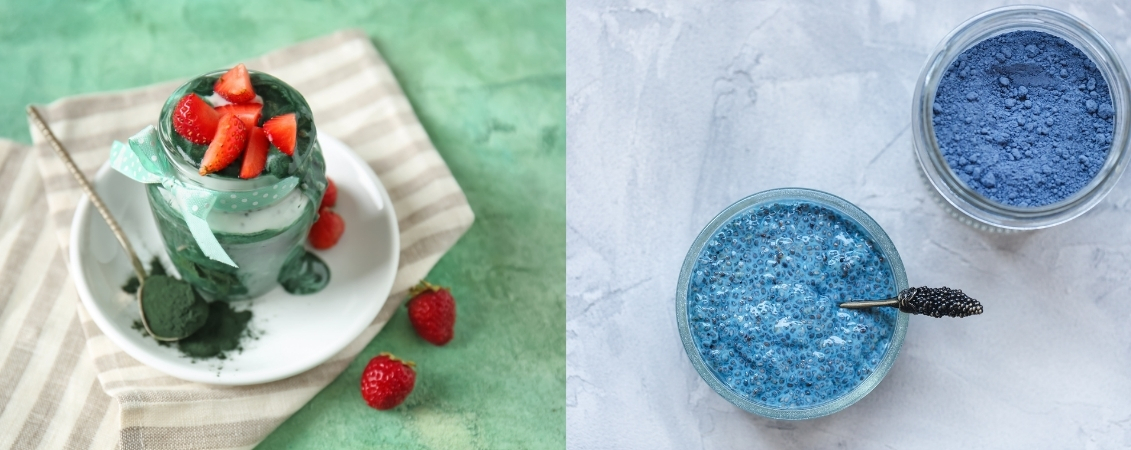
Many people are surprised to learn that "green spirulina" and "blue spirulina" aren't exactly the same product.
|
Green Spirulina |
Blue Spirulina |
|
Whole spirulina algae |
Extracted phycocyanin pigment |
|
Naturally deep green |
Vibrant blue |
|
Earthy flavour |
Milder flavour |
|
Contains the full range of naturally occurring nutrients |
Primarily valued for its colour and phycocyanin content |
|
Popular in smoothies and everyday recipes |
Popular for colourful drinks, desserts and smoothie bowls |
Which should you choose?
If you're looking for the complete nutritional profile of spirulina, whole green spirulina powder is generally the preferred choice. Blue spirulina is often chosen for its vibrant colour and milder flavour, particularly in smoothies and desserts.
How Do You Use Spirulina Powder?
Spirulina powder can easily be incorporated into a variety of everyday meals and drinks.
Popular ways to enjoy spirulina include:
- Smoothies
- Fresh juices
- Smoothie bowls
- Overnight oats
- Greek yoghurt
- Homemade energy balls
- Protein shakes
- Salad dressings
Because spirulina has a concentrated flavour, a small serving is usually all that's needed. Looking for inspiration? Try our Spirulina Energy Balls recipe or explore more healthy smoothie and breakfast recipes featuring spirulina.
Spirulina vs Chlorella: What's the Difference?
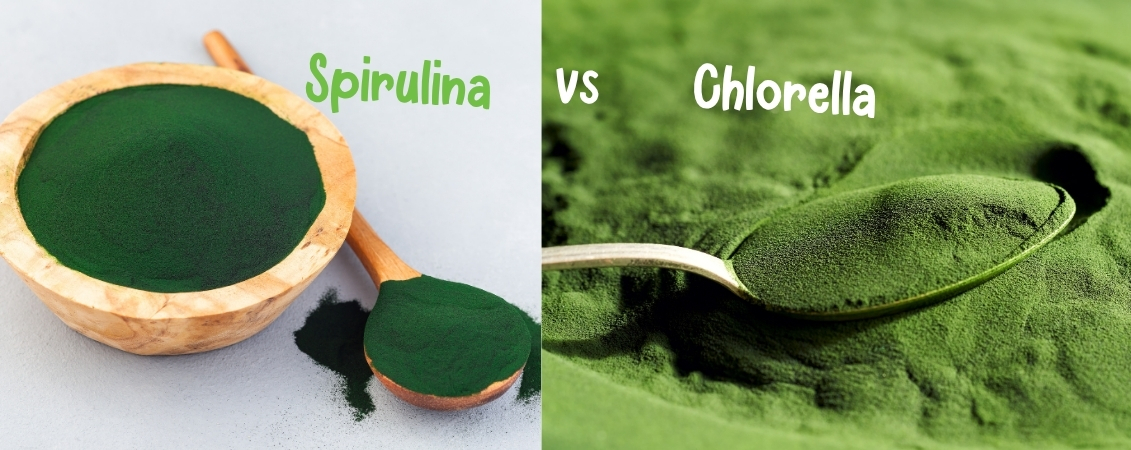
Spirulina and chlorella are both nutrient-rich algae that are often grouped together as superfoods. While they share some similarities, they differ in their appearance, nutritional profile, taste and how they're commonly used.
The table below highlights the main differences.
|
Spirulina |
Chlorella |
|
|
Type |
Blue-green algae |
Green algae |
|
Colour |
Deep blue-green |
Bright green |
|
Taste |
Mild earthy |
Strong grassy |
|
Protein |
Naturally high |
Naturally contains protein |
|
Cell Wall |
No hard cell wall |
Tough cell wall |
|
Pigments |
Phycocyanin |
Chlorophyll |
|
Best For |
Smoothies, yoghurt, recipes |
Capsules, smoothies, juices |
Which One Is Better?
Neither spirulina nor chlorella is inherently "better"—the right choice depends on your personal preferences and nutritional goals.
Many people choose spirulina because it:
- Has a milder flavour that blends well into smoothies and recipes.
- Mixes easily into drinks and breakfast bowls.
- Is naturally rich in plant protein.
- Contains phycocyanin, the blue pigment that gives spirulina its distinctive colour.
Others prefer chlorella for its naturally high chlorophyll content and vibrant green colour.
Some people even enjoy both as part of a varied diet, using each in different recipes depending on the flavour and nutritional profile they're looking for.
Can You Take Spirulina and Chlorella Together?
Yes. Spirulina and chlorella are commonly enjoyed together in smoothies, juices or wellness recipes. Since they have different nutrient profiles, many people like incorporating both into a balanced diet.
If you're trying either for the first time, it's often a good idea to begin with a small serving to become familiar with the taste before gradually increasing the amount according to the product's serving suggestions.
Tips for Enjoying Spirulina Powder
- Start with a small serving if you're new to spirulina.
- Blend it with naturally sweet fruits like banana or mango.
- Store it in an airtight container away from heat and moisture.
- Add it to cold recipes to preserve its vibrant colour.
- Experiment with smoothies, energy balls and yoghurt bowls.
Frequently Asked Questions
- Can You Drink Spirulina Every Day?
Many people enjoy spirulina as part of their daily routine. As with any food or supplement, it's best to follow the serving recommendations on the product packaging and include it as part of a varied and balanced diet. - Best Time to Take Spirulina
Many people add spirulina to:- Morning smoothies
- Breakfast bowls
- Protein shakes
- Afternoon snacks
- How should spirulina powder be stored?
Store spirulina powder in an airtight container in a cool, dry place away from heat and direct sunlight. - Is spirulina suitable for vegans?
Yes. Spirulina is naturally plant-based and is commonly enjoyed as part of vegetarian and vegan diets. - Can You Cook with Spirulina Powder?
Yes. Spirulina powder can be added to a variety of recipes, including baking, smoothies and homemade snacks. Many people prefer adding it to cold dishes or after cooking to help preserve its vibrant colour and fresh flavour.
Final Thoughts
Whether you're blending it into smoothies, stirring it through yoghurt or experimenting with homemade recipes, Organic Spirulina Powder is an easy way to add more variety to your everyday meals.
Looking for inspiration? Browse our healthy recipes, discover our range of superfoods, or shop our Organic Spirulina Powder to get started.
![General Wholefoods [Supplier Spotlight]](https://cdn11.bigcommerce.com/s-dis4vxtxtc/images/stencil/160w/uploaded_images/general-wholefoods-1.jpg "General Wholefoods [Supplier Spotlight]")


![goodMix [Supplier Spotlight]](https://cdn11.bigcommerce.com/s-dis4vxtxtc/images/stencil/160w/uploaded_images/goodmix-thumbnail.jpg "goodMix [Supplier Spotlight]")