
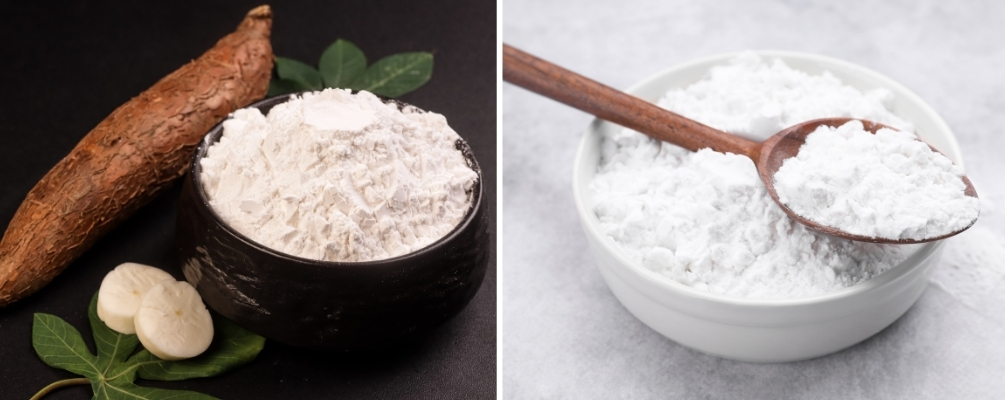
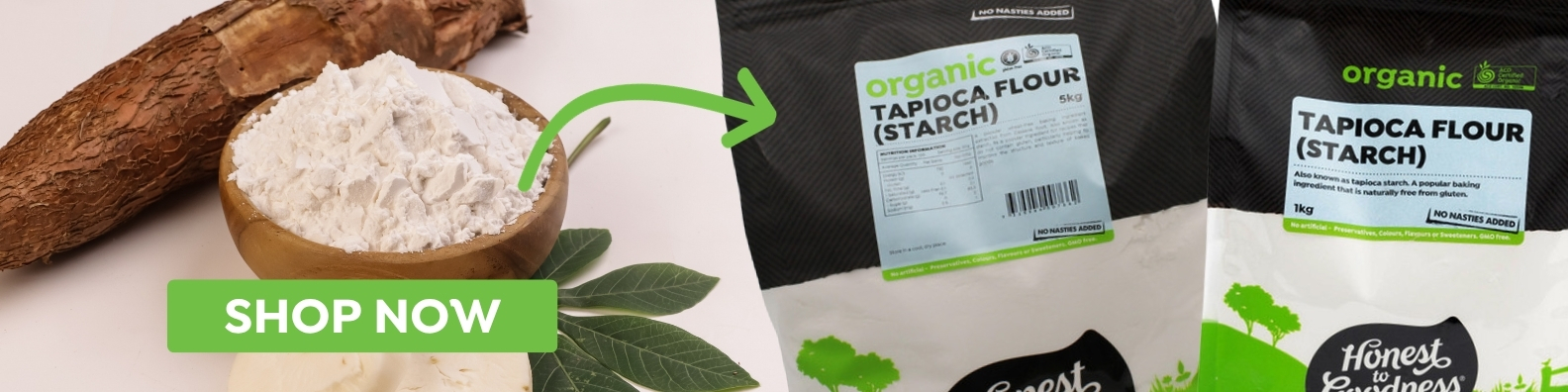
Tapioca flour is a fine, white starch extracted from cassava root. It is naturally gluten-free and is commonly used to thicken sauces, bind ingredients and give gluten-free baked goods a lighter, chewier or crispier texture.
Also known as tapioca starch, this versatile pantry staple has a neutral flavour, making it suitable for both sweet and savoury recipes.
What is tapioca flour made from?
Tapioca flour is made from the starch of the cassava root, a starchy root vegetable also known as yuca or manioc.
To produce tapioca flour, cassava roots are generally washed and processed to separate the starch from the fibrous parts of the root. The extracted starch is then purified, dried and milled into a fine powder.
Our Organic Tapioca Flour contains 100% organic tapioca starch, with no added fillers, colours, flavours or preservatives.
Is tapioca flour the same as tapioca starch?
Yes. Tapioca flour and tapioca starch generally refer to the same ingredient and can be used interchangeably in recipes.
The name used on the packaging may differ between brands or countries, but both products are the fine starch extracted from cassava root.
Is tapioca flour the same as cassava flour?
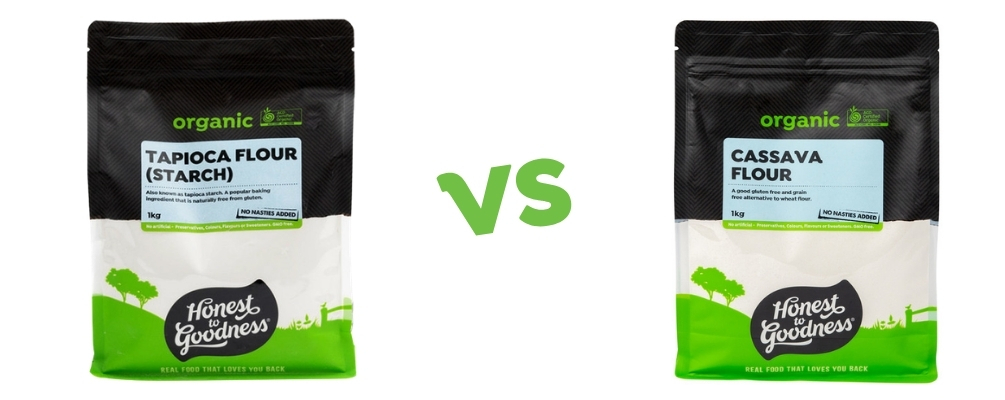
No. Although both ingredients come from cassava root, tapioca flour and cassava flour are produced differently.
- Tapioca flour is made from the extracted starch of the cassava root. It is very fine, white and almost flavourless.
- Cassava flour is made using more of the whole cassava root. It usually contains more fibre and may have a slightly different flavour and texture.
Because their properties differ, tapioca flour and cassava flour may not work as direct one-to-one substitutes in every recipe.
Is tapioca flour gluten-free?
Tapioca is naturally free from gluten and is frequently used in gluten-free flour blends, breads, cakes and other baked goods.
However, anyone with coeliac disease or a severe gluten intolerance should still check the product packaging for gluten-free claims and possible cross-contact information. Naturally gluten-free ingredients can sometimes be exposed to gluten during processing, packing or storage.
What does tapioca flour do in baking?
Tapioca flour helps improve the structure and texture of gluten-free baked goods. Depending on the recipe and amount used, it can:
- Add chewiness to cookies and breads
- Create a lighter, more elastic texture
- Help bind ingredients together
- Retain moisture in gluten-free baking
- Add crispness to pizza bases and pie crusts
- Help baked goods brown more evenly
For most baking recipes, tapioca flour works best when combined with other gluten-free flours or starches rather than used as the only flour.
Rice flour, buckwheat flour, almond meal and potato starch are some ingredients commonly paired with tapioca flour in gluten-free flour blends.
How do you use tapioca flour as a thickener?
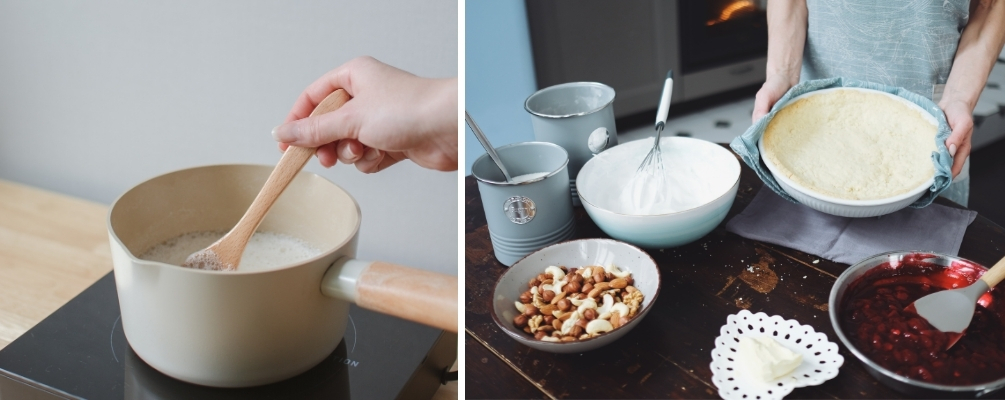
Tapioca flour can be used to thicken soups, sauces, gravies, custards and pie fillings. It produces a smooth, glossy finish and has a neutral flavour that will not overpower the other ingredients.
For best results:
- Mix the tapioca flour with a small amount of cool water to make a smooth slurry.
- Gradually stir the slurry into the warm liquid.
- Heat gently while stirring until the mixture thickens.
- Avoid adding the dry flour directly to hot liquid, as it may form lumps.
- Tapioca thickens relatively quickly, so begin with a small quantity and add more only when required.
How can you use tapioca flour?
Tapioca flour is useful for much more than gluten-free bread. You can use it to:
- Make gluten-free cookies softer and chewier
- Add moisture and structure to gluten-free breads
- Create crispier pizza bases and pie crusts
- Thicken soups, sauces, stews and gravies
- Thicken puddings, custards and fruit pie fillings
- Bind vegetable patties, fritters and other mixtures
- Lightly coat foods before frying
- Improve the texture of homemade gluten-free flour blends
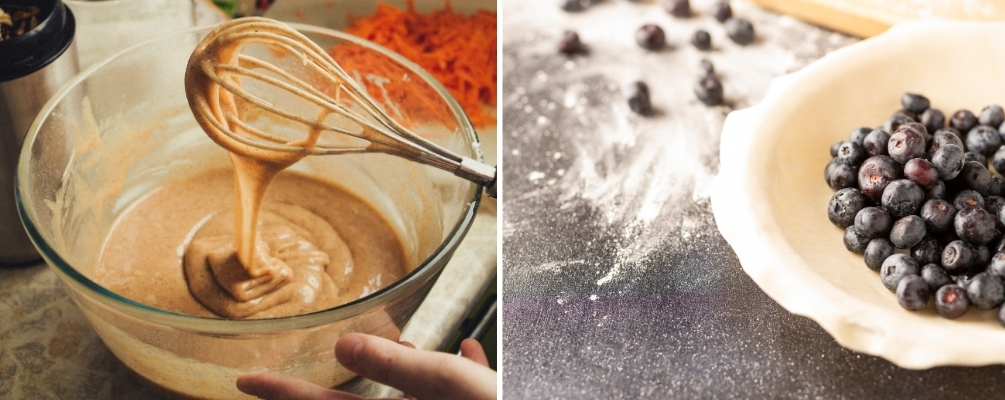
Goodness tip: Lightly coat berries, chocolate chips or dried fruit in tapioca flour before folding them into a thick cake or muffin batter. This may help distribute the pieces more evenly throughout the mixture.
Can tapioca flour replace cornstarch?
Tapioca flour can often be used instead of cornstarch when thickening sauces, soups and fillings. However, the required amount may vary depending on the recipe and the desired consistency.
As a general starting point, use approximately two tablespoons of tapioca flour for every one tablespoon of cornstarch, then adjust as needed.
Tapioca flour can create a glossier and slightly more elastic consistency than cornstarch, so the final result may not be exactly the same.
What can you substitute for tapioca flour?
The best substitute depends on how the tapioca flour is being used.
- For thickening: Corn starch, potato starch or arrowroot starch may work.
- For gluten-free baking: Potato starch or arrowroot may replace some of the tapioca flour, but the texture can change.
- For binding: Cornstarch or another suitable starch may work, depending on the recipe.
Tapioca flour contributes a distinctive chewy and elastic texture, so replacing it in bread, pizza or other baked goods may require adjustments to the remaining ingredients.
Is tapioca flour suitable for a low-FODMAP diet?
Pure tapioca starch may be suitable for some people following a low-FODMAP diet, but suitability can depend on the serving size, the complete recipe and individual tolerance.
A gluten-free product is not automatically low in FODMAPs because it may contain other ingredients that are high in FODMAPs. Anyone managing IBS or following a medically recommended diet should refer to current professional guidance or seek advice from a qualified dietitian.
How should tapioca flour be stored?
Store tapioca flour in an airtight container in a cool, dry place away from direct sunlight and moisture. Use a clean, dry spoon when measuring it to help prevent contamination and clumping.
Always follow the storage directions and best-before date shown on the product packaging.
Where can you buy tapioca flour?
You can buy Honest to Goodness Organic Tapioca Flour online in sizes suitable for home kitchens, food businesses and bulk baking:
It is also available from our Alexandria store in Sydney.
Frequently asked questions
- What is tapioca flour used for?
Tapioca flour is mainly used for thickening, binding and improving texture. It can thicken sauces and fillings while adding chewiness, moisture or crispness to gluten-free baked goods. - Does tapioca flour have a flavour?
Tapioca flour has a very mild, neutral flavour and little aroma. It can be added to sweet or savoury recipes without significantly changing their taste. - Can you use tapioca flour by itself for baking?
It is generally best to combine tapioca flour with other gluten-free flours or starches. Using too much tapioca flour on its own can make some baked goods overly chewy, sticky or dense. - Is tapioca flour suitable for vegan recipes?
Pure tapioca flour is plant-based and suitable for vegan recipes. Always check the other ingredients in the complete recipe or packaged product. - Is tapioca flour grain-free?
Yes. Tapioca flour comes from cassava root rather than wheat or another cereal grain, so it is naturally grain-free. - Is tapioca flour the same ingredient used to make tapioca pearls?
Both are produced from cassava starch, but they come in different forms. Tapioca flour is a fine powder, while tapioca pearls are processed into small spheres commonly used in desserts and bubble tea.
Also read: What is Xanthan Gum?
![General Wholefoods [Supplier Spotlight]](https://cdn11.bigcommerce.com/s-dis4vxtxtc/images/stencil/160w/uploaded_images/general-wholefoods-1.jpg "General Wholefoods [Supplier Spotlight]")


![goodMix [Supplier Spotlight]](https://cdn11.bigcommerce.com/s-dis4vxtxtc/images/stencil/160w/uploaded_images/goodmix-thumbnail.jpg "goodMix [Supplier Spotlight]")